For almost a decade, the voice assistant in your kitchen was a glorified egg timer with a search engine bolted on. You learned its dialect — the exact incantation of “turn on the kitchen sink light” — and you resented it when it played the wrong song. In 2026 that era is ending, fast. Amazon’s Alexa+ and Google’s Gemini for Home have rebuilt their assistants on large language models, and the difference is not subtle. The catch: the smartest version of each now sits behind a subscription, and Apple, the company that arguably needs a generative overhaul the most, still hasn’t shipped one.
If you’re deciding which ecosystem to commit to this year — or whether to pay the monthly fee at all — here’s how the three actually stack up right now, what they cost around the world, and where each one still falls on its face.
What actually changed
The headline shift is that you no longer have to talk like a robot to be understood. Both Alexa+ and Gemini for Home parse natural, messy, context-aware speech. “Turn on the light over the sink” works even if the device is officially named “Kitchen Counter 2.” You can ask follow-up questions without repeating the subject. You can say “it’s too bright in here” and have the assistant infer that you mean the room you’re standing in.
The second shift is agency. These assistants now chain actions together. Amazon’s go-to demo has Alexa+ “organize a night out” — it checks your calendar, cross-references restaurant ratings, books a table through OpenTable, and schedules an Uber timed to the reservation. Whether you’d actually trust it to do all that unsupervised is another question, but the plumbing is real and it’s shipping.
For smart home owners specifically, the practical win is routines and troubleshooting. Instead of building an automation in a clunky app, you can describe it: “every weekday at sunset, close the living room blinds and set the lamps to 40%.” Both assistants can now generate that routine from a sentence. That’s a genuine quality-of-life upgrade, and it’s the reason this is worth paying attention to even if you found the old assistants perfectly adequate.
Amazon Alexa+: the better smart home assistant
Alexa+ is Amazon’s generative rebuild, and after several weeks of living with it, the consensus — including Consumer Reports’ testing — is that it’s the most capable smart home assistant of the three. That’s not the same as being the smartest AI (more on that below), but for the specific job of running a house full of devices, Amazon’s decade-long head start in device integration shows.
It has the widest compatibility net, the deepest routine support, and it handles the long tail of weird off-brand gadgets better than anyone. The conversational layer means you can finally manage that sprawl without memorizing device names. Ask it why a routine didn’t fire and it’ll often tell you, instead of cheerfully ignoring the question like the old Alexa did.
The cost. This is where Amazon played its hand well. Alexa+ runs $19.99/month for non-Prime members in the US (€22.99/month in France and Germany), but it’s included free with Amazon Prime. Since most of Amazon’s existing Echo base already pays for Prime, the majority of users get the upgrade at no extra cost. That single decision reframes the entire market: for Prime households, the question isn’t “is Alexa+ worth $20” but “why wouldn’t I turn it on.”
Availability has expanded through Early Access to the US, UK, Canada, Mexico, Italy, Spain, Germany, Austria, and now France. Amazon also refreshed the hardware: the Echo Dot Max landed in the UK on March 20, 2026 at £99.99, with better bass and onboard sensors tuned for the new assistant.
The downsides are real. Alexa+ can be erratic — sometimes nailing your intent, other times spinning off on a tangent when it misreads you. And as Consumer Reports noted, the companion app still holds the experience back; the intelligence is in the voice layer, not the screen. It’s a smarter assistant trapped in the same old interface.
Google Gemini for Home: the smarter brain, the messier rollout
Gemini for Home is the more impressive AI. In raw conversational intelligence, general knowledge, and the quality of its answers, Google’s assistant is ahead. If you ask open-ended questions, reason through a problem, or want it to actually understand a convoluted request, Gemini is the one that feels like it’s from 2026 rather than 2019.
The rollout, though, has been a slog. Gemini for Home is live in Early Access across 19 countries — the US, UK, Australia, New Zealand, and much of Europe — replacing the old Google Assistant on existing Nest speakers and displays. It’s an opt-in invite system: you’ll be notified when it reaches you, or you can request access. That staggered approach means two people with identical Nest Hubs can have completely different assistants right now, which makes recommending it to a friend awkward.
The cost. The basic tier is free: everyday tasks, smart home control, timers, broadcasts, and media playback all work at no charge. The real Gemini experience — the conversational, reasoning-heavy Gemini Live mode — lives behind Google Home Premium. In the US that’s $10/month or $100/year for Standard, and $20/month or $200/year for Advanced (UK: £8/£80 and £16/£160).
There’s also new hardware: the Google Home Speaker at $99.99 / £99.99. Its launch has been quietly slippery — officially “Spring 2026,” but retailer listings have pointed to a late-June 2026 ship date. Buy it and you get six months of Home Premium Standard thrown in (a $60 value), which is Google’s way of getting you hooked on Gemini Live before the meter starts.
So the pricing logic is the inverse of Amazon’s. Google gives you a competent free assistant and charges for the genius; Amazon bundles the genius into a subscription you probably already pay for. If you don’t have Prime and don’t want another monthly bill, Gemini’s free tier is the better deal. If you do have Prime, Alexa+ is effectively free and harder to beat.
Apple Siri: still waiting at the starting line
And then there’s Apple, which is having a genuinely rough time. The generative Siri overhaul — the one that would put Apple in the same conversation as Gemini and Alexa+ — has been delayed repeatedly, and it’s dragging Apple’s whole home strategy with it.
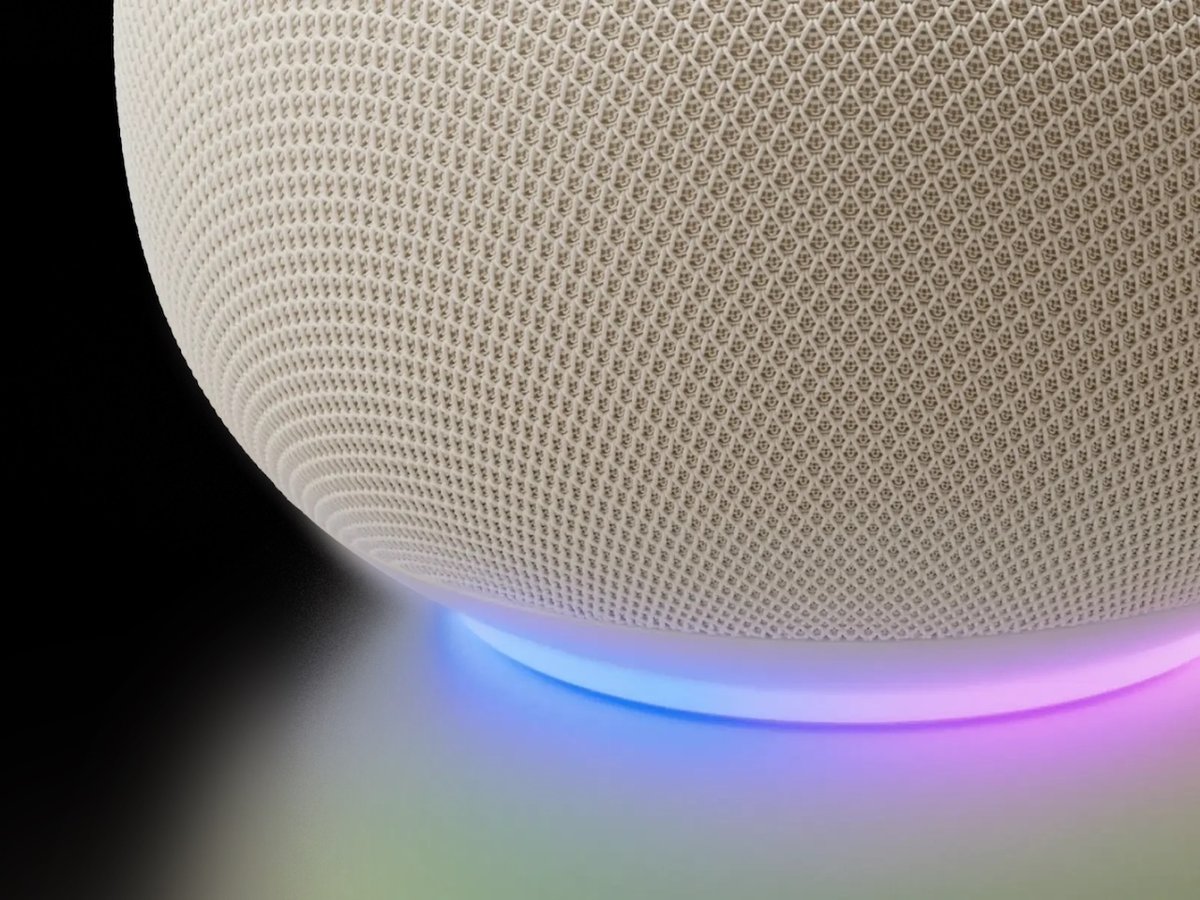
The long-rumored HomePad (a 7-inch wall-mounted home hub with MagSafe mounting and doorbell integration) was originally penciled in for spring 2025, then spring 2026, and has now slipped to roughly September 2026, lined up with iOS 27. The hardware has reportedly been finished for months. The hold-up is entirely software: Apple won’t ship the device until the new Apple Intelligence–powered Siri is reliable enough, and by all accounts it isn’t yet. A refreshed HomePod mini and Apple TV 4K are expected in the same fall window.
The frustrating part for Apple loyalists is that the company’s smart home fundamentals are strong. HomeKit is private, local-first, and rock-solid. Apple Home Key and the broader ecosystem are genuinely good — if you’ve weighed Apple Home Key against Samsung’s Digital Home Key, you know Apple’s hardware story holds up. But the assistant gluing it all together is now visibly a generation behind, and no amount of polish on the HomePad changes that until Siri can actually hold a conversation. For 2026, if your priority is a cutting-edge AI assistant, Apple is a bet on the future, not a purchase for today.
The privacy and lock-in question
There’s a quieter cost to all of this that the marketing won’t mention: these assistants are more capable precisely because more of your speech and context is being processed in the cloud by an LLM. The agentic features — booking, calendar access, cross-referencing your preferences — only work because the assistant has reach into your data.
If that makes you uneasy, you’re not alone, and there’s a credible alternative. Local-first voice control has matured enough that you can run a capable assistant entirely on your own hardware — we walked through the options in our look at Home Assistant Voice PE versus the cloud assistants. You give up some of the conversational magic, but nothing leaves your house. For a lot of people the honest answer is a split: a cloud assistant for the convenience features, and local control for anything security-related like locks and cameras.
The other trap is lock-in. Picking Alexa+ or Gemini increasingly means buying into that company’s hardware, subscriptions, and routine ecosystem. The good news is that Matter and Thread have made the devices themselves far more portable than they used to be — your Matter bulbs and locks will work across all three platforms. So the smart move is to keep your devices standards-based and treat the assistant as the one swappable layer. If you’re building from scratch, a stack of Matter-compatible smart bulbs and Matter sensors will follow you to whichever assistant wins.
So which should you actually pick?
Here’s the honest breakdown for mid-2026:
- You have Amazon Prime: Turn on Alexa+. It’s free for you, it’s the best pure smart home assistant, and there’s no reason to leave that capability switched off. The erratic moments are worth tolerating at zero marginal cost.
- You’re deep in Google and don’t want a subscription: Gemini for Home’s free tier is genuinely good for daily control. Skip Home Premium unless you find yourself wanting the conversational Gemini Live mode often enough to justify $10/month.
- You want the single smartest assistant and will pay for it: Gemini Advanced via Home Premium is the most capable AI of the bunch.
- You’re an Apple household: Sit tight. Keep using HomeKit for its privacy and reliability, but don’t expect a competitive Siri until at least this fall — and treat any 2026 launch date as provisional given the track record.
The bigger picture is that, for the first time, the assistant is the part of your smart home worth thinking hard about. The lights and locks have largely been commoditized by Matter. The intelligence layer is where the real competition — and the real money — now lives. Whichever way you lean, keep your actual devices on open standards, and you’ll be free to switch assistants the moment one of these companies pulls ahead for good. Setting up a new ecosystem from scratch can be fiddly, so if you’d rather not wrestle with it yourself, a guided Google Home or Alexa setup is an easy way to get the foundation right before you pick your assistant.