For a decade, Apple treated the smart home as a feature of the iPhone: a Home app, a framework, and a HomePod or Apple TV quietly acting as the hub in a cupboard. On October 13, at a “Welcome Home” event in New York, it started treating the home as a product line. There’s a $299 smart display called HomeView, a second-generation HomePod mini, a new Apple TV 4K, and an “Apple Home Collection” of cameras, a lock and thermostats that Apple designed with LG and Schneider Electric rather than building them itself.
It’s the biggest Apple smart home launch since HomeKit itself. It’s also very American, very iCloud-dependent, and, for anyone in the EU, mostly not for sale. Here’s what was announced, what it means for Matter and Thread homes, and who should actually spend money this year.
Everything Apple announced, at a glance
| Product | Price (USD) | Ships | Where |
|---|---|---|---|
| HomeView (tabletop or wall-mounted) | $299 | Nov 13 | US, UK, Canada, Australia, NZ, India, Singapore, South Africa (not the EU) |
| HomePod mini 2 | $149 | Oct 30 | Most Apple markets |
| Apple TV 4K (4th gen, 128GB) | $299 | Nov 13 | US and 29 other countries/regions |
| LG Video Doorbell Wired | $249.95 | December | US, Canada, UK |
| LG Indoor Cam Plug-In | $199.95 | December | US, Canada, UK |
| LG Outdoor Cam Plug-In | $299.95 | December | US, Canada, UK |
| LG Floodlight Cam Plug-In | $399.95 | December | US, Canada, UK |
| LG Smart Deadbolt Lock | $349.95 | December | US, Canada |
| LG Smart Thermostat / Schneider Home Smart Thermostat | $199.95 each | December | US, Canada |
| LG Temperature Sensor / Schneider Home Room Sensor | $39.95 each | December | US, Canada |
Apple says Home Collection availability starts in December, with “select accessories” following in early 2027, so don’t assume every box will be under the tree. The full details are in Apple’s Home Collection announcement, and MacRumors has a good event recap.
HomeView: a $299 smart display that’s really a Siri AI terminal
The hardware
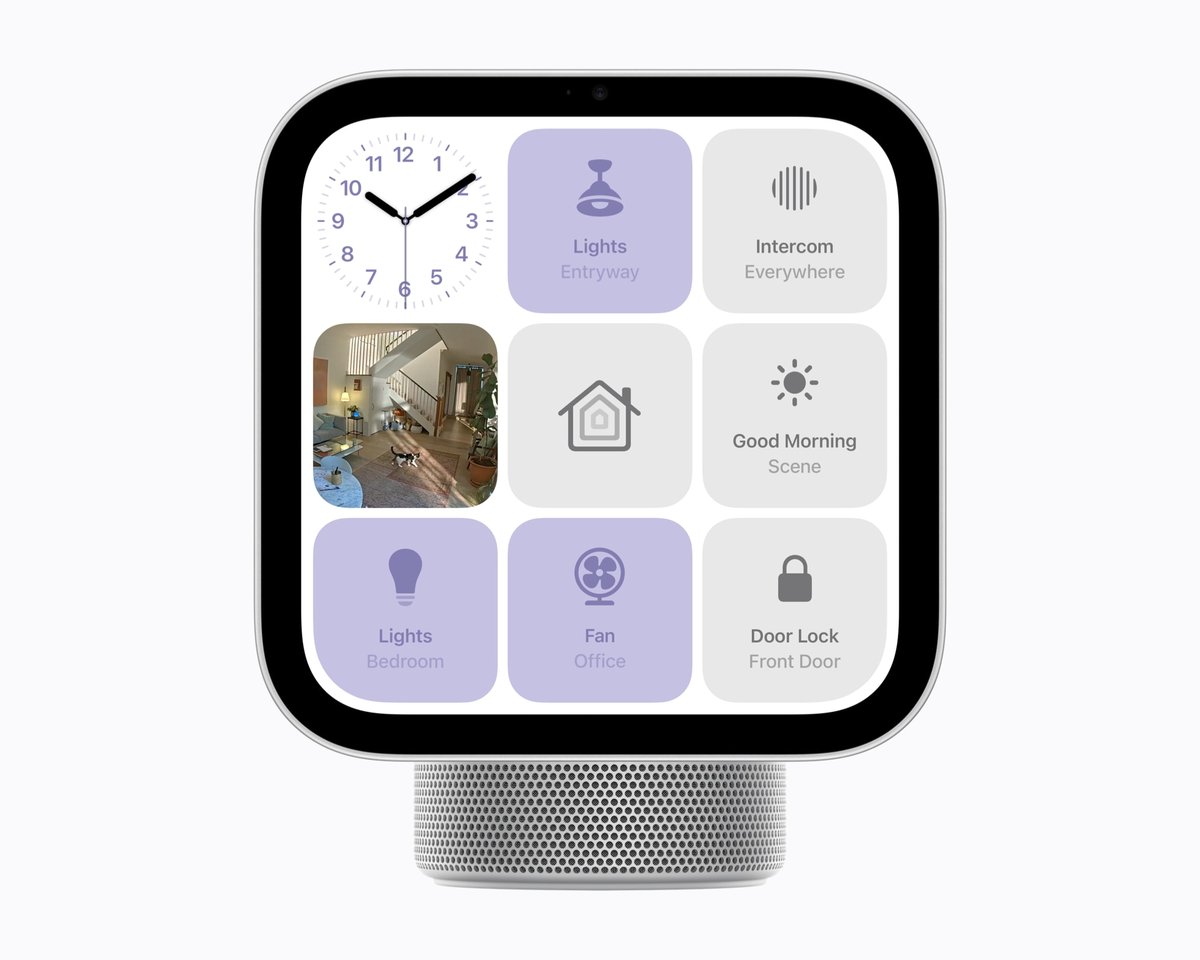
HomeView puts a square 7-inch Liquid Retina display (1088 × 1088 pixels, 220 ppi, 500 nits) on a stainless steel hinge above a domed speaker base. Inside is an A18 chip, a 12MP Center Stage camera, a four-microphone array, two full-range drivers, a down-firing woofer and two passive radiators. For connectivity it has Wi-Fi 6E, Bluetooth 6.0 and Thread, plus a temperature and humidity sensor and an ambient light sensor. The tabletop model comes in silver, starlight, rose pink and space gray.
The wall-mounted version costs the same $299 but swaps the speaker dome for a flat back 0.39 inches deep, keeping only the two full-range drivers. You’ll need to power it, though: Apple’s Power Mount accessories start at $59.95 for a USB-C wall connector and $79.95 for an AC-wired mount, and a $129.95 PoE mount follows in early 2027. A wall-mounted HomeView can easily cost $380 before an electrician gets involved. Every hardware spec is on Apple’s HomeView specs page.
The face trick
HomeView’s headline feature is that it recognizes up to six people by their faces and changes the home screen to suit whoever is looking at it: your calendar, your reminders, your Find My devices. Apple has put real thought into the privacy side. Camera and microphone data is processed in isolated “Secure Exclaves”, and personal content like Messages and Calendar needs a recognized face plus a recently unlocked iPhone nearby before it appears. Your teenager can’t read your messages just by walking past the kitchen.
On the smart home side, there’s a Home screen face for touch control and a camera face showing up to nine feeds at once. That’s the first Apple screen that makes sense as a permanent security monitor without an iPad stuck to the wall.
What’s missing
- No App Store. HomeView runs Apple’s own apps. Third-party audio and video apps work by projecting from a paired iPhone, much like CarPlay. If you wanted to run Home Assistant’s dashboard or a Sonos app natively, you can’t.
- Siri AI leans on your iPhone. HomeView handles general knowledge and conversation on its own, but the “personal context” features need an Apple Intelligence-capable iPhone or iPad paired to it. Setup needs an iPhone on iOS 27.2 or later.
- No EU launch. Siri AI isn’t available in iOS in the European Union, so Apple simply isn’t selling HomeView there. More on that below.
- Hub status is fuzzy. Apple’s marketing calls HomeView “a central hub”, and it has a Thread radio. But on launch day Apple’s support documentation still listed only HomePod and Apple TV as home hubs, and Apple didn’t spell out Thread border router behavior. Expect that to be clarified by the November 13 ship date, but don’t sell your Apple TV on the assumption.
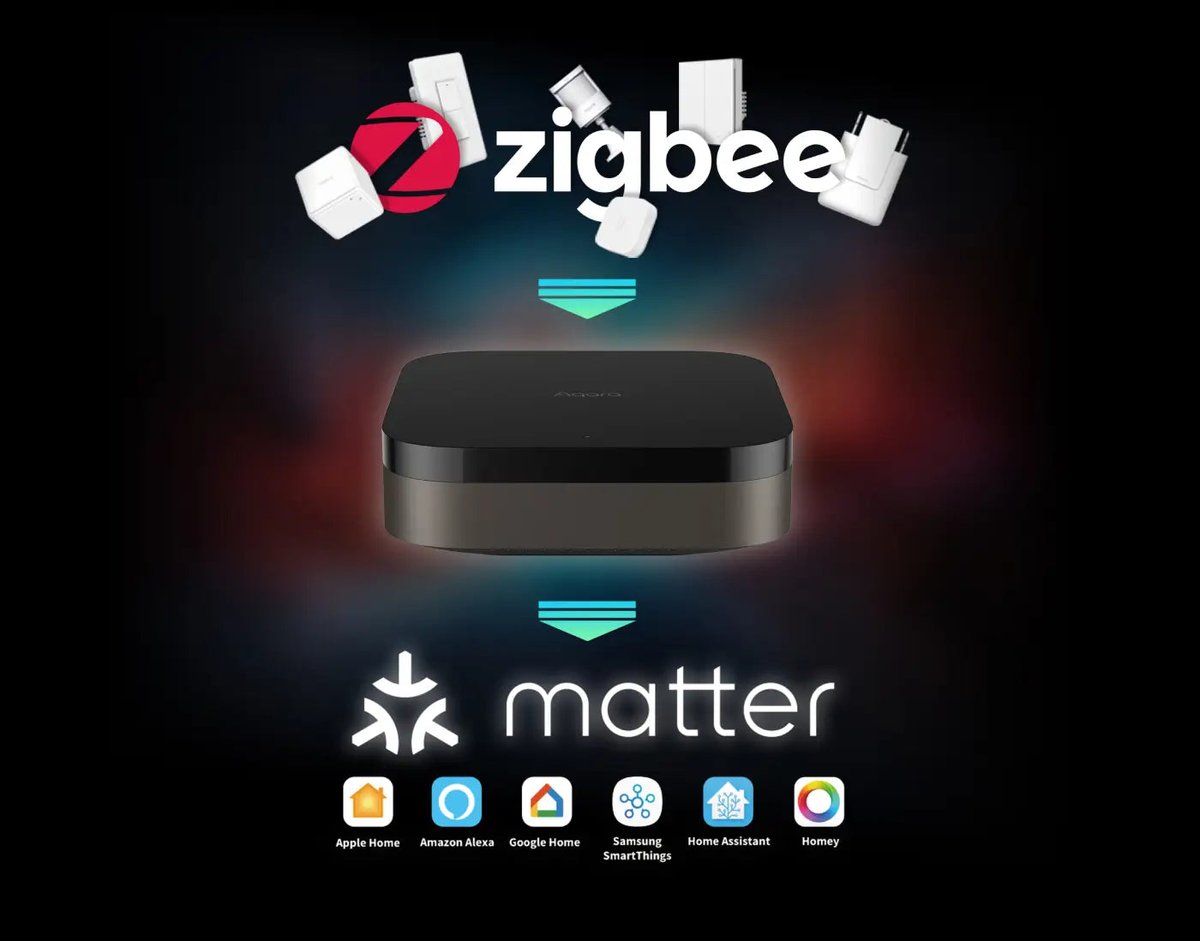
Like every Apple device, HomeView has no Zigbee radio. If your home runs on Zigbee sensors, you still need a bridge such as an Aqara Hub M3, which also exposes those devices to Apple Home over Matter.
The Home Collection: Apple-designed, LG- and Schneider-built
This is the strategically interesting part. Rather than build cameras and locks itself (the long-rumored path), Apple has designed a matching family of accessories with two big manufacturers. Every device in the collection supports Thread, which Apple says keeps it connected if Wi-Fi drops. Setup is a single NFC tap with an iPhone, and Apple says camera footage and Home data are end-to-end encrypted and “never accessible to LG Electronics, Schneider Electric, or Apple.”
Cameras and doorbell
LG makes all four cameras. The Video Doorbell Wired ($249.95) has two cameras: a 2.5K front view for visitors and a Full HD bottom view for packages on the mat, plus a spotlight and chime. The Indoor Cam ($199.95) tilts itself up and down to follow the scene, and the Outdoor Cam ($299.95) and Floodlight Cam ($399.95) add low-light color night vision. Apple says the cameras recognize people, familiar faces, pets, vehicles and packages.
Here’s the catch: this is HomeKit Secure Video, so your recordings live in iCloud+. The 50GB plan covers one camera, 200GB covers up to five, and 2TB is unlimited. Video summaries and natural-language search (“show me when the dog went outside”) also need an eligible iCloud+ plan and an Apple Intelligence device. If you already pay for 200GB of iCloud for family photos, the cameras’ storage is effectively free. If you don’t, budget for it.
The prices are also bold. A $399.95 floodlight cam is Ring and Arlo flagship money, and as we found in our outdoor camera showdown, Reolink and eufy will give you local storage and more resolution for a fraction of that. You’re paying for Apple-grade privacy and integration, not specs.
The LG Smart Deadbolt and Aliro
The LG Smart Deadbolt Lock ($349.95) is the most forward-looking product of the day. It supports Matter, Apple Home Key and Aliro, the Connectivity Standards Alliance’s cross-platform phone-as-key standard that reached version 1.0 in February 2026. With Ultra Wideband, the door unlocks as someone with a home key on a compatible iPhone or Apple Watch walks up, with no tapping required. There’s also a PIN pad, a backup key cylinder and tamper detection, and Apple stresses that core access works entirely locally if your internet goes down.
Aliro is the part to watch. Home Key only works with Apple devices. Aliro is meant to let Android phones unlock the same door, which is the gap we flagged in our Samsung Digital Home Key vs. Apple Home Key comparison. Apple, Google and Samsung are all behind the standard (see the CSA’s Aliro page). An Apple-blessed lock shipping with Aliro is a strong sign that mixed-phone households won’t be second-class.
At $349.95, though, it’s $80 more than the Aqara Smart Lock U400, which has done UWB hands-free Home Key unlocking over Thread and Matter since early 2026 at $269.99. The U400 is also sold in Australia, New Zealand and Singapore, where the LG lock isn’t coming at all.
Thermostats
Two $199.95 Thread thermostats, one from LG and one from Schneider Electric, each with an optional $39.95 room sensor, and C-wire power adapters at $24.95 if your wiring lacks one. Both tie into a new Adaptive Temperature feature in the Home app, and Schneider’s model adds Clean Energy Guidance, shifting heating and cooling to cleaner, cheaper grid periods. These are US/Canada products built for North American forced-air HVAC. If you’re in a radiator or mini-split home, our room-by-room climate control guide is the more useful read.
HomePod mini 2 and Apple TV 4K: the hubs you already know
The HomePod mini 2 ($149) is the first update to Apple’s small speaker since 2020. It uses a new S10 chip, Wi-Fi 6E, Bluetooth 6, Thread, UWB and the temperature/humidity sensor, in white, pink, green, blue and midnight. The top gets a “Sound Glow” light that pulses with the bass, and four of them can act as surround speakers for the new Apple TV. Two caveats: it costs $50 more than the original did at launch, and Siri AI arrives “via a future software update”, not on day one. It ships October 30. If you only want a Thread border router and Apple Home hub, it’s still the cheapest way into Apple’s ecosystem. For music, see our multi-room audio showdown.
The Apple TV 4K (4th gen) is the sticker shock of the day: $299 for a single 128GB model, more than double the outgoing model’s $129 starting price. You get an A19 chip, Wi-Fi 7, Gigabit Ethernet, Thread and, for the first time, far-field microphones so you can talk to Siri AI without the remote. For a smart home, Ethernet plus Thread still makes the Apple TV the most reliable home hub Apple sells. But if your current Apple TV 4K is already your hub, nothing here forces an upgrade. The redesigned Siri Remote ($59 separately) adds Find My with Precision Finding, which may be the most universally welcome announcement of the day.
How HomeView stacks up against Echo Show and Google
Amazon’s Echo Show 8 ($179.99) and Echo Show 11 ($219.99) undercut HomeView on price, are often discounted, and have years of third-party skills behind them. Google’s display lineup is in limbo: the aging Nest Hub is still on sale while Google moves its speakers to Gemini, with the best Gemini for Home features behind a Google Home Premium subscription.
HomeView’s case is better hardware, privacy and the face-aware personalization. Neither rival has anything like it. Its weaknesses are the walled garden (no app store, Apple-only video services unless you project from an iPhone) and the iCloud+ dependency for cameras. Which assistant is actually smarter at running your home is a separate fight. We compared Gemini for Home, Alexa+ and Siri in June, and Siri AI on a dedicated home device is the first real test of whether Apple has closed that gap.
The global picture: who can actually buy this
For a “global” smart home launch, the availability map is strikingly uneven:
- US and Canada: Everything, including the lock and thermostats.
- UK: HomeView, the cameras and the doorbell. No lock, no thermostats.
- Australia, New Zealand, India, Singapore, South Africa: HomeView, HomePod mini 2 and Apple TV, but no Home Collection at all.
- European Union: No HomeView, because Siri AI isn’t available in iOS in the EU, and no Home Collection either. The HomePod mini 2 and Apple TV are the only parts of the launch most Europeans can buy.
If you’re outside North America, the smart move is HomeView, or a HomePod mini 2 as the hub, paired with Matter devices that are actually sold locally. In practice that means the Aqara U400 for hands-free Home Key, an Aqara Climate Sensor W100 as a Thread temperature sensor, and a doorbell like the Aqara G410, which already supports HomeKit Secure Video (we compared it in our doorbell buyer’s guide). Because the Home Collection devices are Matter accessories, they should in principle be shareable with other platforms via Matter Multi-Admin. Apple didn’t mention it, though, and HomeKit Secure Video won’t follow them to Google or Alexa.
Who should buy, and who should wait
Preorder HomeView if you live in a supported country, your household is all-iPhone, and you want a shared kitchen screen that shows the right calendar to the right person. Nobody else’s display does that, and $299 is fair for the hardware.
Buy the HomePod mini 2 if you need a first Thread border router and Apple Home hub, or your original mini is dying. Just don’t buy it for Siri AI until the update actually ships.
Skip the Apple TV 4K upgrade if your current one is already your home hub. Buy it if you want hands-free Siri AI on the TV and Wi-Fi 7, and can stomach $299.
Wait on the Home Collection until reviews land in December. These are first-generation products from a new partnership, the cameras’ value depends on your iCloud+ plan, and the Aqara U400 already does the lock’s party trick for less.
If you’re in the EU, wait, full stop. Apple’s EU Siri AI situation is a regulatory and software question, not a hardware one, and nothing announced on October 13 tells you when it will be resolved.
The bottom line
Apple’s October 13 launch finally gives Apple Home a face, literally, and a coherent set of first-party-feeling accessories, all built on Thread, Matter and, for the lock, Aliro. That’s good news for open standards: Apple’s biggest smart home push ever runs on the same protocols as everyone else’s devices.
But the price of admission is high. Expect $299 displays and set-top boxes, near-$400 cameras and an iCloud+ plan for footage, and most of it ships only in North America. For most people, the best response to Welcome Home is to pick one thing (a HomeView for the kitchen, or a HomePod mini 2 as a hub) and fill the rest of the house with the Matter devices you can actually buy where you live.