The smart doorbell just grew up
If you told me two years ago that a $130 video doorbell would double as a complete smart home hub, I’d have called you optimistic. But here we are in 2026, and the Aqara Doorbell Camera Hub G410 does exactly that — while Google’s latest Nest Doorbell brings Gemini AI to your front porch, and Ring’s Battery Doorbell Pro shoots in near-4K resolution.
The smart doorbell category has never been this interesting. These three products represent fundamentally different visions of what a doorbell should be, and picking the right one depends entirely on what you care about most. Let’s break it down.
What you’re choosing between
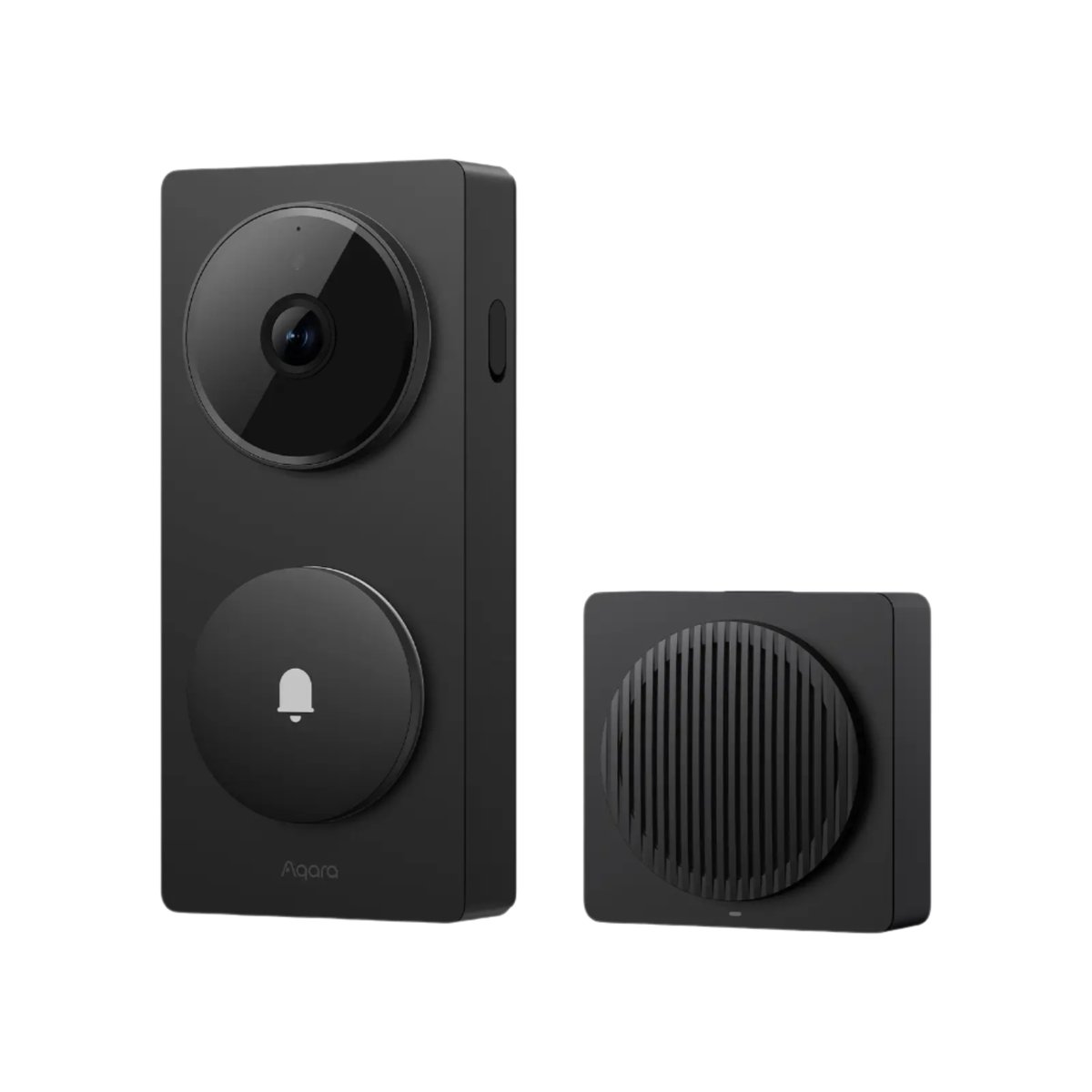
Aqara Doorbell Camera Hub G410 — $130 The hub-first approach. A 2K doorbell that’s also a Zigbee hub, Thread border router, and Matter controller. If you’re building an Aqara or Matter-based smart home, this one device could replace your hub and your doorbell.
Google Nest Doorbell (Wired, 3rd Gen) — $180 The AI-first approach. A wired 2K doorbell with a unique 1:1 square aspect ratio, Gemini AI integration, and IP65 weather resistance. Google’s answer to “what if your doorbell was actually smart?”
Ring Battery Doorbell Pro (2nd Gen) — $230 The security-first approach. Near-4K resolution, radar-powered 3D motion detection with Bird’s Eye View mapping, and deep Alexa integration. The most expensive option here, but the camera hardware is impressive.
Video quality: it’s closer than you’d think
All three doorbells shoot in roughly 2K resolution, but the details matter.
The Aqara G410 outputs 2048 x 1536 at a 4:3 aspect ratio with a 175-degree field of view — the widest of the three. That 4:3 ratio is smart for a doorbell because it captures more vertical space, so you actually see packages on the ground and faces at the same time. The catch? You only get the full 2K resolution in the Aqara Home app. If you’re using HomeKit Secure Video, you’re limited to 1080p.
The Nest Doorbell shoots 2048 x 2048 in a 1:1 square format with a 166-degree FOV. Google’s logic here is similar to Aqara’s — maximize vertical coverage — but they went even further with a perfect square. It supports 6x digital zoom and has genuinely excellent HDR night vision thanks to a wider aperture that keeps color mode active longer in low light. The IP65 weather resistance means you can mount it in the rain without worry.
The Ring Pro technically has the sharpest image at 1536p HDR with color night vision and a 150-degree field of view. Ring markets it as “Retinal 4K,” though real-world resolution is closer to 2K. The narrower FOV means less fisheye distortion, which some people prefer for faces, but it misses more of the periphery.
Winner: Tie between Nest (best night vision and weather resistance) and Aqara (widest FOV at the lowest price). Ring’s image is sharp but the narrow field of view is a real trade-off.
The Aqara trick: your doorbell is now your hub
This is where the G410 becomes genuinely unique. For $130, you’re getting:
- A Zigbee 3.0 hub that supports Aqara’s full range of sensors, switches, and accessories
- A Matter controller that works with third-party Matter devices
- A Thread border router for Thread-based devices
- A video doorbell with 2K resolution and local storage
If you’re running an Aqara ecosystem — or planning to start one — the G410 means you might not need a separate hub at all. Pair your Aqara presence sensors, door sensors, and smart switches directly to your doorbell. It sounds almost too clever, and honestly it works well in practice.
The G410 also supports HomeKit Secure Video, which means all your recordings can be stored and encrypted through iCloud with no subscription fee (assuming you have iCloud+). It plays nicely with Home Assistant via native RTSP streaming too, which is a huge deal for the tinkerer crowd.
Local storage is another standout: pop in a microSD card (up to 512GB) and you get continuous recording with no monthly fees. You can also push recordings to a NAS. Neither Ring nor Nest offer local storage of any kind.
Google’s Gemini play
The Nest Doorbell’s party trick is Gemini AI integration. In the Google Home app, you can ask Gemini questions about your doorbell footage — “Did any packages arrive today?” or “When did the kids get home?” — and get natural language answers based on your camera history.
It’s genuinely useful, though it requires a Nest Aware subscription ($8/month or $80/year) for event video history beyond the basic 3-hour window. Without it, you’re limited to real-time viewing and basic alerts.
Google’s object detection is best-in-class for a doorbell. It reliably distinguishes between people, packages, animals, and vehicles, with very few false alerts. The 1:1 aspect ratio captures a complete head-to-toe view that makes identification easy.
The downsides? It’s wired only — no battery option. And while it integrates beautifully with Google Home, there’s no HomeKit support, no RTSP, and no native Home Assistant integration. You’re locked into the Google ecosystem.
Ring’s security muscle
The Ring Pro leans hardest into security features. 3D Motion Detection uses radar to create a top-down map of movement around your door — Bird’s Eye View shows you the exact path a person walked across your property, which is genuinely impressive for security purposes.
The Quick Release Battery can be swapped in seconds without removing the doorbell from the wall, and you can hardwire it for continuous charge. It’s the most flexible for installation.
Deep Alexa integration means you can see your doorbell feed on any Echo Show, get announcements when someone presses the button, and have two-way conversations from anywhere. If you’re already in the Amazon ecosystem, it’s seamless.
The catch? Ring requires a Ring Protect subscription ($4.99/month for Basic, $12.99/month for Plus) for video recording, person detection, and most of the features that make it worth the $230 price tag. Without it, you only get live view and real-time notifications. There’s no local storage option.
Ring also doesn’t support Matter, HomeKit, or Home Assistant natively. It’s Amazon’s walled garden — comfortable if you’re already inside, frustrating if you’re not.
Protocol and ecosystem compatibility
This is where things get really interesting. Here’s the honest compatibility picture:
| Feature | Aqara G410 | Nest Doorbell | Ring Pro |
|---|---|---|---|
| Matter | Controller + Bridge | No | No |
| Thread | Border Router | No | No |
| HomeKit | HSV supported | No | No |
| Google Home | Yes | Native | No |
| Alexa | Yes | Limited | Native |
| Home Assistant | RTSP + native | Workarounds | Workarounds |
| SmartThings | Yes | Limited | Yes |
| Local storage | microSD + NAS | No | No |
| Subscription needed | No | Yes (for history) | Yes (for recording) |
The Aqara G410 wins the compatibility game by a landslide. It’s the only doorbell here that works across every major ecosystem and doesn’t require a monthly subscription for its core features.
The weather problem
I need to be upfront about the G410’s biggest weakness: IPX3 water resistance. That means it handles light rain and splashes, but it cannot be exposed to heavy rain or direct weather. You need a covered or semi-covered porch.
The Nest Doorbell at IP65 handles rain, dust, and pretty much anything short of being submerged. The Ring Pro also handles weather well with its enclosed design.
If you have an exposed, uncovered entrance, the G410 is not an option. That’s a hard limitation that no amount of clever hub features can work around.
The real cost over two years
The sticker price only tells part of the story:
| Aqara G410 | Nest Doorbell | Ring Pro | |
|---|---|---|---|
| Device | $130 | $180 | $230 |
| Storage/subscription | $15 (128GB microSD) | $160 (Nest Aware) | $120–$312 (Ring Protect) |
| Hub (if needed) | $0 (built-in) | N/A | N/A |
| 2-year total | ~$145 | ~$340 | ~$350–$542 |
The Aqara’s value proposition is frankly hard to beat. A 2K doorbell, smart home hub, local storage, and zero subscriptions for under $150. Even if you add the $50 Aqara M3 Hub for a more central location, you’re still well ahead.
Who should buy what
Buy the Aqara G410 if you want maximum value, you’re building a Matter or Thread smart home, you hate subscriptions, or you’re an Apple Home or Home Assistant user. Just make sure your doorbell location is under cover. If you’ve been following our coverage of Aqara’s presence sensors, the G410 ties beautifully into that ecosystem.
Buy the Nest Doorbell if you’re deep in the Google ecosystem, you want the best weather resistance, or Gemini AI features genuinely excite you. Budget for the ongoing Nest Aware cost.
Buy the Ring Pro if security is your absolute top priority, you want radar-powered motion tracking, or your entire home already runs on Alexa. Budget for the Ring Protect plan.
The bottom line
The Aqara G410 is the doorbell I’d recommend to most people reading this site. At $130 with no subscriptions, a built-in Matter and Thread hub, and compatibility with essentially every smart home platform, it’s the most forward-thinking option here. The IPX3 weather rating is a genuine concern, but if you have a covered porch — and most homes with a doorbell do — it’s the clear winner.
If you’re already invested in the Apple Home Key vs. Samsung Digital Home Key debate, adding the G410 to your front door setup gives you a doorbell that actually talks to the rest of your smart home. That’s the future, and at this price, there’s no reason to wait.