The year your front door learned to recognize your face
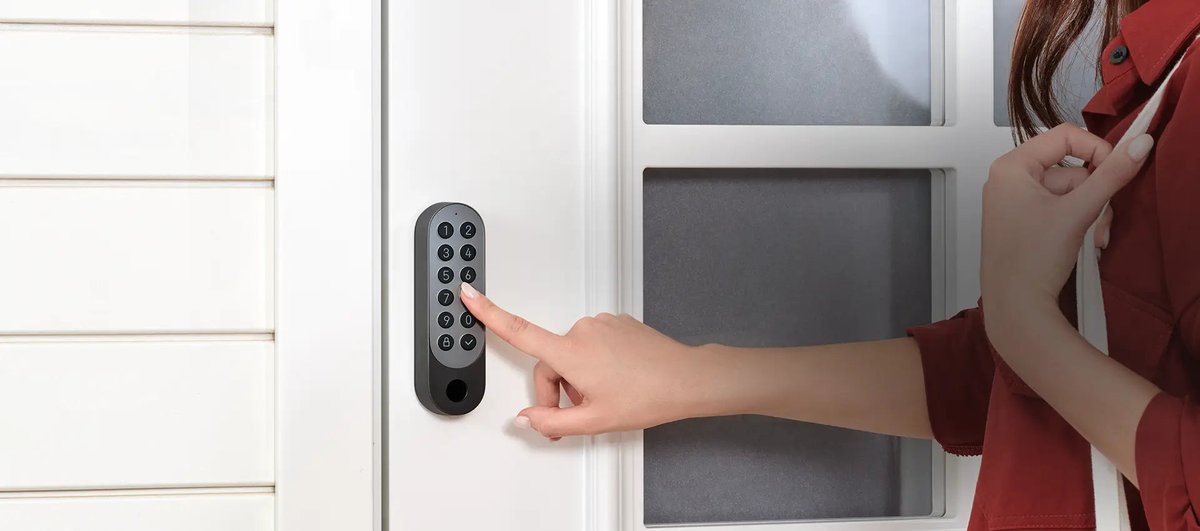
For about a decade, “smart lock” meant one of two things: a keypad you tapped a PIN into, or a fingerprint reader you pressed a thumb against. Both work. Both are also quietly showing their age. PINs get shoulder-surfed and shared around until half the building knows them, and fingerprint sensors turn temperamental the moment your hands are wet, cold, dusty — or belong to a five-year-old whose prints haven’t really formed yet.
2026 is the year the industry decided to fix that with cameras and infrared. Within a few months of each other, SwitchBot, eufy, Lockly, TP-Link, and Xthings (the company behind Ultraloq) all shipped or announced deadbolts that unlock by reading your face in 3D or the vein pattern inside your palm. No touching, no typing, no phone in hand. You walk up, and the door opens.
It’s genuinely impressive, and it’s genuinely a minefield of trade-offs — price, privacy, protocol support, and how well any of this holds up when it’s -10°C and you’re carrying groceries. Here’s how the 2026 biometric-lock class actually stacks up, with real prices, real protocol details, and the caveats the spec sheets skip.
Why face and palm vein beat the fingerprint
Fingerprints were the first “real” biometric on locks, and they solved the shared-PIN problem. But capacitive fingerprint readers fail in predictable, annoying ways: wet fingers, chapped winter skin, sweat, sunscreen, or just a badly enrolled print. Kids and older adults with faint ridges get rejected constantly.
Two technologies aim past those failure modes:
- 3D structured-light facial recognition projects tens of thousands of invisible infrared dots onto your face to build a depth map — the same principle as Apple’s Face ID. Because it reads geometry, not a flat image, it works in total darkness and is far harder to fool with a printed photo than the old 2D camera locks. It’s also completely hands-free.
- Palm vein recognition shines near-infrared light just under your skin to map the vein pattern in your hand. Those patterns sit below the surface, are effectively impossible to lift or photograph, and don’t care if your palm is dry, dirty, or calloused. You hold your hand a few centimeters from the reader — contactless, hygienic, and it works for people whose fingerprints never scan well.
Neither is magic. Face recognition needs a clear line of sight to your face (a raised hood or a mask can trip it), and palm vein still asks for a deliberate gesture rather than a truly passive walk-up. But as replacements for “memorize this 6-digit code,” both are a real step up.
The contenders
SwitchBot Lock Vision & Lock Vision Pro — the value pick
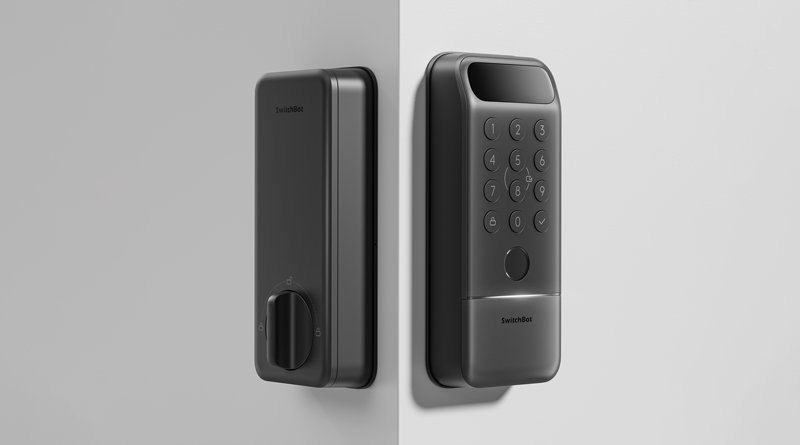
SwitchBot launched the Lock Vision series in North America on May 15, 2026, billing it as the first smart deadbolt with 3D structured-light facial recognition. There are two models, and the split matters: the standard Lock Vision ($169.99) does 3D face unlock; the Lock Vision Pro ($229.99) adds contactless palm-vein scanning and a semiconductor fingerprint reader on top. Both saw a $40 launch discount that dipped them to $129.99 and $189.99 respectively — worth watching for if it returns.
What makes this the sensible-money choice is the plumbing. It’s a retrofit lock that mounts over your existing deadbolt in about 15 minutes with no drilling, it runs Matter-over-Wi-Fi with no separate hub required, and biometric data is stored locally on the lock and encrypted with AES-128 rather than living in someone’s cloud. A 10,000mAh rechargeable battery is rated for roughly 12 months, with a CR123A cell as emergency backup. Between face, palm, fingerprint, keypad, NFC, app, and physical key, there are more than ten ways in. As 9to5Mac noted in its coverage, being genuinely Matter-native out of the box is the part rivals struggle with.
eufy FamiLock S3 Max — the everything-lock
If the SwitchBot is the scalpel, the eufy FamiLock S3 Max is the Swiss Army knife. At around $399, it crams a palm-vein reader, a 2K HDR video doorbell, a night-vision camera, and a 4-inch interior touchscreen that shows the door camera feed into a single deadbolt. eufy claims palm identification in under 0.1 seconds, and it’s carried by a chunky 15,000mAh rechargeable battery with AAA cells as backup, plus a BHMA physical-security rating.
Be honest with yourself about the value math, though. As Tom’s Guide found in testing, $400 is more than a good video doorbell and a good smart lock cost combined, palm-vein unlocking is accurate but not quite as instant as a fingerprint, and reviewers ran into occasional connectivity hiccups. It also leans on the eufy app rather than full Matter. But if you specifically want a lock and a doorbell to be one device — and you’ll actually use that little screen — nothing else here does it. (If a standalone doorbell is more your speed, our 2026 doorbell shootout covers the field.)
Lockly Visage (Zeno Series) — face plus radar, Apple-friendly (eventually)
Lockly’s Visage Zeno Series pairs 3D facial recognition with radar-based approach detection — the door starts recognizing you as you walk toward it — plus a 3D fingerprint sensor and Apple Home Key via NFC. Pricing lands around $349–$399 depending on retailer.
The catch is protocols. As of mid-2026 the Visage lock itself is not yet Matter certified (certification is pending), and it doesn’t do native Apple HomeKit yet either. Lockly’s answer is a separate backward-compatible Matter hub that bridges the lock into Google Home, Amazon Alexa, and SmartThings. It’s a fine lock with a genuinely slick face-plus-radar experience, but if a clean, hub-free Matter setup is your priority today, read the fine print before you buy.
TP-Link Tapo DL130 — palm vein without the luxury tax
TP-Link brought palm vein down to earth. The Tapo DL130, reviewed by Gearbrain and on sale since June 8, 2026, does palm-vein plus fingerprint across seven unlock methods, works with Alexa, Google Assistant, and SmartThings, claims up to a year of battery, and comes in under $230. That’s palm-vein biometrics for less than half the eufy’s price. The trade-off is ecosystem: it’s built around the Tapo app and the big three assistants rather than confirmed native Matter or HomeKit, so weigh that if you’re already committed to Apple Home.
Ultraloq Bolt Sense — the wildcard to watch
Unveiled at CES 2026, the Ultraloq Bolt Sense (from Xthings) is the most ambitious of the bunch on paper: palm vein and 3D facial recognition, active approach sensing, and support for Matter, the Aliro access standard, and UWB. It was slated for a Q2 2026 launch and pricing still hadn’t been pinned down at its reveal, so treat it as a “watch this space” rather than a buy-today. For reference, its non-biometric UWB sibling, the Bolt Mission, sits at $299 — so expect the Bolt Sense to land at a premium above that.
Face vs. palm vein: which biometric should you actually trust?
Good news first: every lock above stores biometric templates locally on the device, encrypted — none of them ship your face or palm map off to a server for matching. That’s the single most important privacy fact, and it’s now the category norm.
From there it’s about failure modes:
- 3D face is the most frictionless — truly hands-free, works in the dark, tolerates hats, glasses, and makeup. It’s weakest when it can’t see you clearly (a mask, a deep hood, or an awkward height difference for kids and wheelchair users).
- Palm vein is the hardest to spoof, since the vein pattern is sub-dermal — you can’t photograph or lift it. It shrugs off dirty or dry skin. Its downside is that it’s a deliberate gesture (hold your hand up), and you do need a bare palm, so heavy winter gloves mean an extra step.
The practical answer for most homes is a lock that offers both, so different family members and different situations each have a path that works — and always keep the PIN pad and a physical key as fallback. Biometrics should be the fast lane, never the only lane.
The Matter question — read the fine print
This is where marketing and reality diverge most. “Works with Matter” is doing a lot of heavy lifting on some of these boxes.
- SwitchBot Lock Vision is the cleanest story: genuinely Matter-over-Wi-Fi, no hub, certified out of the box.
- Ultraloq Bolt Sense promises Matter plus Aliro — but it isn’t widely shipping yet, so that’s a promise, not a track record.
- Lockly Visage is not certified yet and needs Lockly’s own hub to reach Matter platforms.
- eufy FamiLock and Tapo DL130 lean on their own apps plus Alexa/Google/SmartThings rather than full Matter certification.
And here’s the part that trips everyone up: even on the locks that are Matter-native, Matter only exposes lock/unlock and door status. Enrolling faces and palms, tuning sensitivity, and managing users all happen in the manufacturer’s app. Matter standardizes the door, not the biometrics. If you want the background on what the standard actually covers for locks — NFC provisioning and all — our Matter 1.6 explainer breaks it down.
The UWB alternative: what Aqara and Apple are betting on instead
Not everyone thinks the answer is a camera pointed at your doorstep. There’s a competing school of thought — championed by Aqara and Apple — that the most private biometric is no biometric at all.
Aqara’s Smart Lock U400 skipped face and palm entirely and went UWB (ultra-wideband) instead. The iPhone or Apple Watch in your pocket unlocks the door as you approach, with nothing captured, nothing to spoof, and no image of your face stored anywhere. The trade-off is obvious: it only works for people carrying a compatible, provisioned device — great for the homeowner, useless for a kid or a guest who shows up empty-handed. (Samsung’s Aliro-based Digital Home Key brings the same trick to Android; we pitted the two wallet-based approaches against each other here.)
So the real philosophical split of 2026 isn’t “which biometric” — it’s biometric vs. UWB. Biometrics win for households with kids, guests, and cleaners who need keyless access without a phone. UWB wins for the privacy-conscious solo owner or couple who’d rather their front door never learn their face. Plenty of the better locks now hedge by offering both, but it’s worth deciding which camp you’re in before you spend.
Which one should you buy?
- Best value for most people: SwitchBot Lock Vision Pro. Face, palm, and fingerprint, real hub-free Matter, retrofit install, and a sane $229.99 price. This is the default recommendation.
- Lock and doorbell in one, budget no object: eufy FamiLock S3 Max. Expensive and heavy, but the only device here that also handles your porch camera and gives you an interior screen.
- Apple household that wants face unlock and Home Key: Lockly Visage — as long as you’re patient about its pending Matter certification and comfortable with an extra hub.
- Palm vein on a budget / Alexa-Google-SmartThings home: TP-Link Tapo DL130. Sub-$230 palm-vein biometrics is the bargain of the category.
- Privacy-first, no cameras on your door: Aqara U400. UWB hands-free entry with nothing to store or spoof.
- On the watch list: Ultraloq Bolt Sense, once real pricing and availability land.
Two universal caveats before you check out. First, always keep a physical key and a PIN as backup — batteries die and biometrics have off days. Second, buyers outside the US should confirm the exact model, handing (left/right), and deadbolt standard for their market before ordering: euro-cylinder doors in much of Europe and mortise locks common across parts of Asia don’t all play nicely with these American-style deadbolt retrofits, and availability lags the US launch by months. Get those boring details right, and a door that recognizes your face on a dark, rainy night genuinely feels like living in the future.