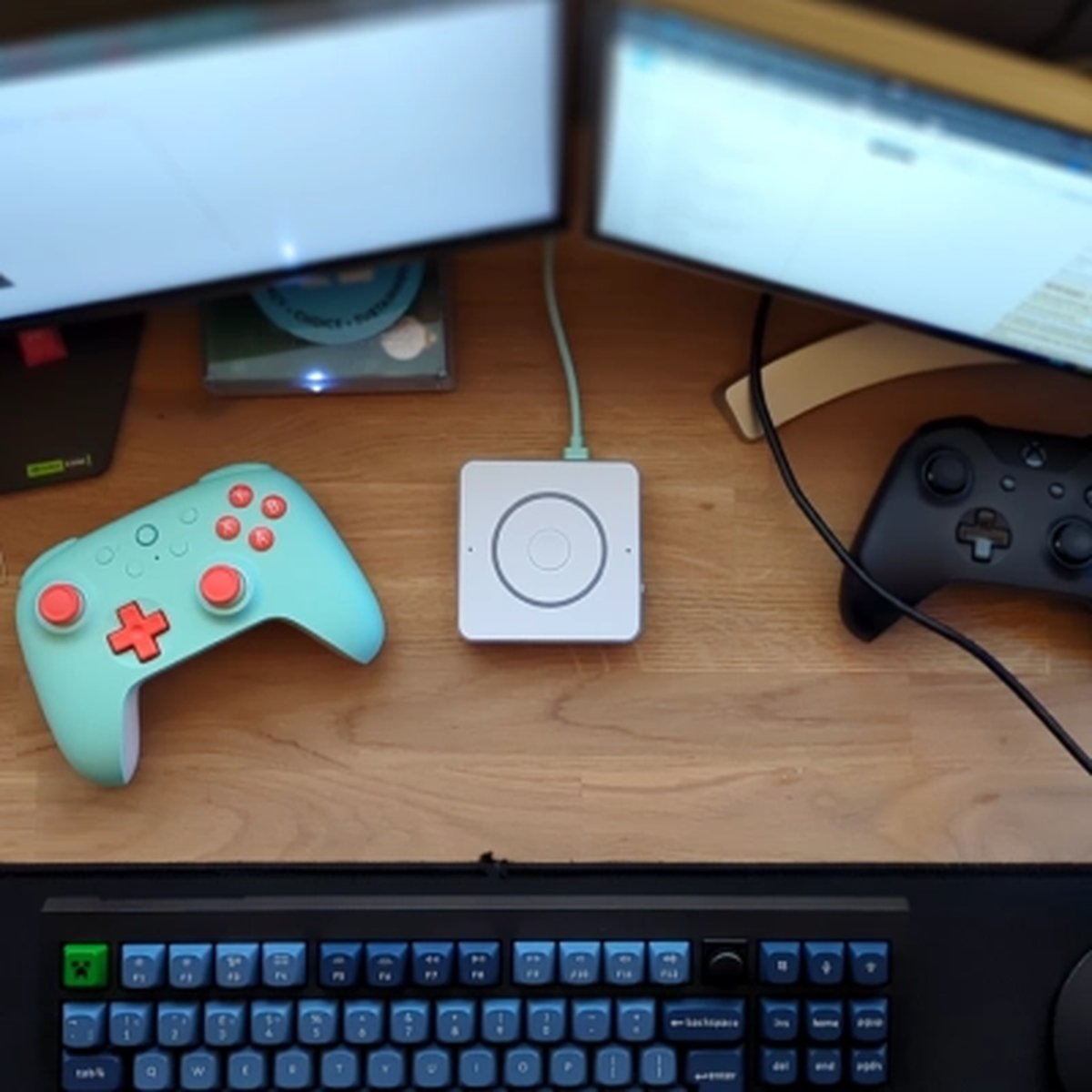
For two decades, the smart speaker has had one defining trait: it sends your voice to a server farm somewhere in Virginia, Oregon, or Frankfurt and waits for a reply. That is finally changing. In late 2024, Nabu Casa quietly shipped a $59 puck called the Home Assistant Voice Preview Edition, and through 2025 and into 2026 the open-source community wrapped it in enough local-LLM glue to make Alexa, Siri, and Google Assistant look like the cloud relics they are.
That doesn’t mean the big three are dead. Apple, Amazon, and Google still make the most polished smart speakers you can buy, and they each have superpowers — Thread border routers, music streaming, multi-room audio — that the open-source crowd is still catching up on. So the real 2026 question isn’t “which is best.” It’s “what trade-off do you want to live with?”
We compared the four most interesting smart speakers under $100: the Home Assistant Voice Preview Edition ($59), Amazon’s Echo Dot 5th Gen ($49.99), Apple’s HomePod mini ($99), and Google’s Nest Hub 2nd Gen ($99.99). Here’s how the cloud, local, and hybrid approaches actually shake out for a real smart home.
Why “local” is suddenly the word everyone uses
The push toward on-device voice processing isn’t ideology — it’s three concrete frustrations finally hitting critical mass.
Privacy fatigue. Every major voice assistant has been caught storing recordings, hiring contractors to listen, or sharing audio across services in ways most users never opted into. Even when those programs end, the architecture that enables them — your voice leaving your house — remains.
Latency. A round trip to a cloud datacenter takes 300–800 ms even with a perfect internet connection. For “turn off the light” that’s annoying. For “set a 5-minute timer” it’s tolerable. For natural conversation with an LLM, it’s enough to break the illusion.
Vendor lock-in. When Amazon discontinued the original Echo Hub, it took some smart home routines with it. When Apple updates Siri, third-party HomeKit accessories sometimes break. Local control means your house keeps working when a company pivots.
The Home Assistant project has been chasing local voice for three years — they call it “the Year of Voice” but it’s stretched into a multi-year saga. The Voice Preview Edition is the first piece of hardware they’ve shipped that actually delivers on the promise, even if it’s not yet a 1:1 replacement for the polished cloud assistants.
Home Assistant Voice Preview Edition — $59
The hardware is unfussy and clearly made by people who use Home Assistant. Inside the small fabric-wrapped puck is an ESP32-S3 SoC with 16 MB of flash and 8 MB of PSRAM, an XMOS XU316 audio chip handling echo cancellation and noise reduction, a dual-microphone array, a 3.5mm headphone jack, and a USB-C power port. There’s a physical mute switch that cuts power to the microphones — not a software toggle, an actual hardware kill switch. The volume ring on top rotates with a satisfying click, like an iPod from 2004.
What you don’t get is a smart home in a box. The Voice PE is essentially a microphone and small speaker that talks to a Home Assistant server you run elsewhere — a Raspberry Pi 5, a mini PC, or whatever you already have. That server does the actual work: speech-to-text, intent matching, and turning “turn off the kitchen lights” into a Zigbee or Matter command.
In its default configuration, Voice PE uses Nabu Casa’s optional Home Assistant Cloud subscription ($65/year, or $6.50/month) for fast cloud-based speech recognition. That gets you sub-second response times comparable to Alexa. Switch to fully local processing — running Whisper for speech-to-text and Piper for text-to-speech on your HA server — and latency stretches to 3–10 seconds depending on hardware. A Raspberry Pi 5 will technically do it; a mini PC with a discrete GPU does it well.
The killer 2026 use case is pairing Voice PE with a local LLM via Ollama. You can run llama3.2:3b on modest hardware and use it as a conversation agent, replacing the rigid command grammar of Alexa and Google Assistant with something that actually understands “make the living room cozy” or “I’m cold.” Home Assistant added streaming support in late 2025 so the response starts speaking while the model is still generating the rest, which makes a 10x difference in perceived speed.
The catches are real. Music playback through the built-in speaker is bad — it’s tuned for spoken responses, not Spotify. There’s no display. Multi-room audio doesn’t exist. And it requires a Home Assistant install, which is friendly but still a project, not a 5-minute setup. This is for tinkerers, privacy hawks, and people whose smart homes already run on Home Assistant.
Amazon Echo Dot 5th Gen — $49.99
The cheapest of the four and, paradoxically, the only one without a Thread border router. Amazon reserved Thread radios for the Echo (4th Gen), Echo Hub, Echo Show 8/10/15/21, and Echo Studio — the Echo Dot 5th Gen is Matter-compatible but not a Thread border router, which is mildly annoying given it’s the model most people actually buy.
What you do get is the most refined smart speaker in this price range. The 1.73-inch driver is genuinely good for podcasts and casual music, the temperature sensor enables routines like “if room exceeds 78°F, turn on the fan,” and motion detection lets you trigger automations as you walk past. Alexa’s third-party skill ecosystem remains huge, and Amazon’s Alexa+ rollout is starting to put a more conversational LLM-powered version on legacy hardware.
The Echo Dot 5th Gen is the right pick if you already have an Alexa house, want one more cheap node, and don’t mind cloud processing. It’s the wrong pick if you want Thread or a Matter-over-Thread border router (look at the Echo Hub or eero 7 instead).
Apple HomePod mini — $99
The HomePod mini’s quiet superpower is that it’s actually a Thread border router, and a good one. If you have a few HomePod minis scattered around the house, you have a Thread mesh whether you realized it or not. That’s a real advantage for anyone running Matter-over-Thread sensors and locks — Apple Home gets a free reliability boost.
Audio is the best in this comparison by a wide margin. The HomePod mini’s computational audio is genuinely impressive for a $99 speaker, and stereo pairing two of them gives you a surprisingly competent kitchen or desk setup. Multi-room audio via AirPlay 2 is the most polished implementation in the industry.
Siri remains the weakest part of the package. Apple keeps promising the LLM-powered “Apple Intelligence” Siri overhaul, and as of April 2026, that’s still in delayed-rollout limbo — the HomePod mini 2 has slipped to late 2026 along with the Siri rebuild that was supposed to ship with it. The current Siri can handle lights, locks, and timers competently but stumbles on anything multi-step.
If you live in Apple’s walled garden, the HomePod mini is still the cleanest, most reliable choice. If you don’t, almost nothing about it works for you.
Google Nest Hub 2nd Gen — $99.99
The Nest Hub 2nd Gen is the awkward middle child: it’s a smart display, not just a speaker, and its 7-inch screen has been showing its age since about 2023. But Google quietly added a Thread border router and full Matter support via firmware updates, so for the price of a HomePod mini you also get a screen, sleep tracking, and a digital photo frame.
Pricing is the most volatile of the four. MSRP is $99.99 but the Nest Hub 2nd Gen drops to $50–$80 routinely during sales — it’s been on sale somewhere essentially every month of 2026. At $50 it’s a steal; at $99.99 it’s overpriced for hardware Google hasn’t refreshed since 2021.
Google Assistant is still the best of the cloud assistants for general knowledge questions and natural follow-ups, though Gemini-powered upgrades have been arriving slowly. The Nest Hub also acts as a Matter controller, so you can commission Matter devices directly into Google Home from the display.
The Nest Hub is the right pick for anyone in the Google ecosystem who wants a screen on their counter and doesn’t mind that the hardware is five years old.
Latency: where the gap actually shows up
Here’s how a “turn off the bedroom lights” command typically flows in 2026, fastest to slowest:
| Setup | Typical latency |
|---|---|
| Echo Dot / HomePod mini / Nest Hub (cloud) | 0.5–1.0 sec |
| HA Voice PE + HA Cloud subscription | 0.8–1.5 sec |
| HA Voice PE + local Whisper on mini PC | 1.5–3 sec |
| HA Voice PE + local Whisper on Raspberry Pi 5 | 3–10 sec |
| HA Voice PE + local LLM (Ollama llama3.2:3b on a GPU box) | 1.5–4 sec for short replies |
The cloud assistants still win on raw speed when you have good internet. Where Voice PE pulls ahead is when your internet is bad, your ISP is having a bad day, or you simply don’t want every “set a timer” leaving the house.
Privacy: the actual difference
Every cloud assistant in this comparison processes voice on a remote server. Apple anonymizes more aggressively than Amazon or Google, but the audio still leaves your home. None of the three offer a true “process this entirely on-device” mode for general queries.
The Home Assistant Voice PE is the only option here that can run end-to-end without a single byte leaving your house. The hardware mute switch — a physical kill, not a software flag — is also unique. If your threat model includes “I don’t trust the company that made this device,” it’s the only honest answer in the category.
That said: choosing local doesn’t automatically mean private. If you point Voice PE’s conversation agent at OpenAI or Gemini, you’ve recreated the same cloud trip you were trying to avoid. Local is a setup choice, not a sticker.
The Aqara and presence-sensor angle
One thing that doesn’t get discussed enough: voice control works much better when the house already knows where you are. Pairing any of these speakers with Aqara’s FP series of mmWave presence sensors — particularly the FP2 or the newer FP400 — lets you set up routines where “turn off the lights” defaults to whatever room you’re standing in. Home Assistant handles this elegantly through area-aware automations; Apple Home is starting to via “Sound Recognition” + zones; Google and Amazon are mostly still per-device.
If you’re building a Home Assistant Voice PE setup, room-aware presence is what makes it actually feel magical. Without it, you’re just shouting room names at a microphone.
Which one to actually buy
Buy the Home Assistant Voice PE if you already run Home Assistant, you care about privacy, or you want to experiment with local LLMs in your house. It’s $59 well spent for the right person and a frustrating impulse purchase for the wrong one.
Buy the Echo Dot 5th Gen if you have an Alexa house, want a cheap extra node, and don’t need Thread. At $49.99 it’s the best pure dollar value in this comparison.
Buy the HomePod mini if you live in Apple’s ecosystem and want one device that handles voice, music, and acts as a Thread border router. The audio quality alone justifies the $99.
Buy the Nest Hub 2nd Gen if you want a screen on your kitchen counter and you can catch it on sale. At $99.99 it’s overpriced; at $60 it’s the easiest answer for Google Home households.
The honest 2026 answer for most people is still a cloud assistant. The big three have years of polish, music partnerships, and ecosystem inertia that the open-source world won’t match for a long time. But the Home Assistant Voice PE is the first piece of hardware that makes the local-AI smart home feel inevitable rather than aspirational. A year from now, when the HomePod mini 2 finally ships and Apple Intelligence Siri actually works, the comparison gets more interesting. For now, the cloud is faster, the local is freer, and you can finally pick which one matters more to you.