If you’ve shopped for a robotic pool cleaner in the last year, you’ve felt the whiplash. The category went from boring corded boxes that crawled your pool floor to AI-mapped, camera-equipped, app-controlled cordless robots that skim the surface, scrub the waterline, and dock themselves on a wireless charger. Beatbot and Aiper have poured serious money into making the pool robot feel like the next Roomba — and the marketing is genuinely impressive.
But here’s the thing nobody selling you a $3,000 pool robot wants to say out loud: in 2026, the smartest, most expensive cordless cleaner still doesn’t clean better than a corded Dolphin that costs a quarter as much. And not a single one of these “smart” robots talks to Matter, Apple Home, or Google Home in any meaningful way. The pool is one of the last frontiers the smart home standard still hasn’t reached.
Let’s break down what’s actually worth your money this summer.
The cordless gold rush: Beatbot vs. Aiper
The two brands driving the cordless hype are Beatbot and Aiper, and they’re chasing the same dream — a pool robot you never have to tether to the wall while it runs.
Beatbot AquaSense 2 Ultra — the flagship that wants to be a Tesla
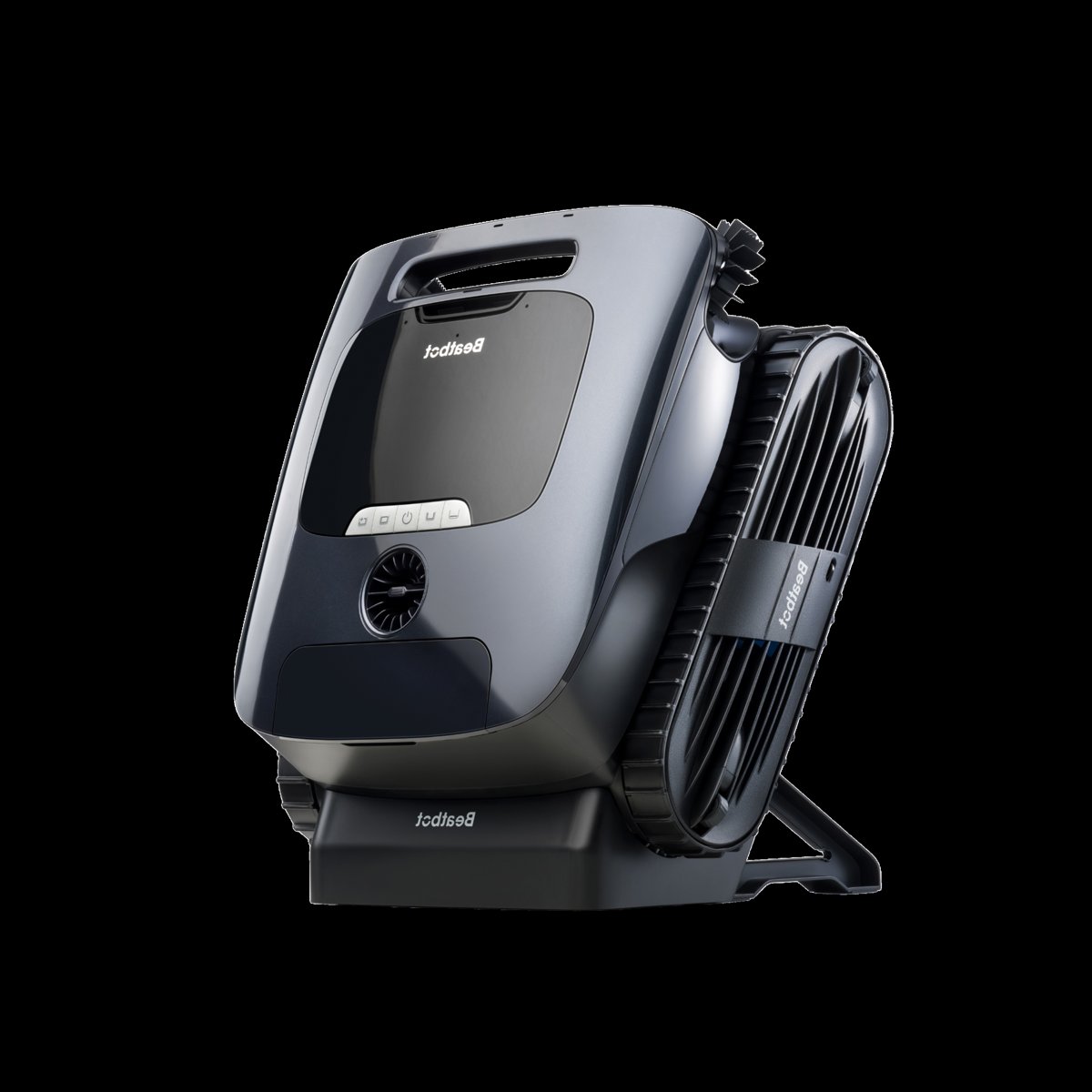
Beatbot’s halo product, the AquaSense 2 Ultra, is the most ambitious pool robot ever built. It’s marketed as the world’s first AI-powered 5-in-1 cleaner: floor, walls, waterline, water-surface skimming, and even a water-clarification system that releases a clarifying agent as it works.
The headline tech is what Beatbot calls HybridSense — a combination of a 4K underwater camera, infrared sensors, and ultrasonic mapping that lets the robot “see” your pool and plan a route instead of bouncing around at random. A 13,400mAh battery delivers up to 10 hours of surface skimming, or roughly 5 hours of floor cleaning, or 5 hours of wall and waterline work. It charges wirelessly on its dock, and the Beatbot app lets you pick cleaning modes, drive it manually, spot-clean a leafy corner, and watch its progress.
It is also genuinely heavy — around 27–29 lbs dry, the heaviest robot in Beatbot’s lineup — and that matters more than you’d think, because with any cordless robot you are lifting it out of the water every single day.
The price is the real shock: list price has sat between $3,150 and $3,550, with Beatbot’s near-constant promotions dropping it to roughly $2,650–$2,830. Reviews are polarized. CNN Underscored and Digital Trends came away impressed by its wall-climbing and surface skimming; testers who’ve run 30-plus robots through the same pools concluded it simply doesn’t justify the price — weak suction by the end of a cycle, a disappointing filter, and AI features that look great in the app but don’t measurably improve the clean.
Beatbot AquaSense 2 Pro and the base model
If the Ultra is the flagship, the AquaSense 2 Pro at $2,099 is Beatbot’s attempt to make cordless mainstream. It keeps the 5-in-1 cleaning pitch but uses a smaller battery, and the same criticism applies harder: as the battery drains and the filter fills, suction noticeably tails off. The entry AquaSense 2 drops to a 3-in-1 (floor, walls, waterline) and ditches the fancy surface skimming. Beatbot also teased the Sora 70, a lighter ~23 lb model with internal buoyancy chambers that let it float up to clean the water surface — a clever idea aimed squarely at leaf-heavy pools.
Aiper Scuba V3 — cheaper, lighter, and finally smarter
Aiper is Beatbot’s main rival and undercuts it hard. The new-for-2026 Aiper Scuba V3 starts at $999 and is the first Aiper that feels genuinely intelligent: it pairs an AI-vision system that maps your pool with heavy-duty tank treads for climbing, and at roughly 18 lbs it’s noticeably easier to haul out than the Beatbot Ultra. The step-up V3 models pile on more cameras and longer runtimes. Aiper’s flagship Scuba X1 Pro Max — nine motors, 40 sensors, and up to a 15-hour battery — runs around $1,800 (closer to $2,300 bundled with its HydroComm dock). At the bottom of the range, the budget Seagull SE is floor-only, won’t climb walls, and runs about 90 minutes on a 2.5-hour charge.
There is, however, a serious asterisk on Aiper. The U.S. Consumer Product Safety Commission has recalled multiple Aiper models for battery overheating and fire risk: roughly 22,000 Elite Pro units and around 35,000 Seagull Pro units. Those specific models are off the shelves, and the newer Scuba line uses revised battery systems — but if you buy Aiper, register the product and follow the charging instructions to the letter. Cordless convenience and lithium batteries living in a wet environment is a combination worth respecting.
The corded reality check: Dolphin still wins
Here’s where the honest-friend talk comes in. After every major independent test this year — including Reviewed’s roundup — the same brand keeps topping the charts, and it isn’t cordless. It’s Dolphin, made by Maytronics.
The reason is physics. A corded robot draws constant mains power, so it can run a stronger pump, scrub harder, and clean on an automatic weekly timer without anyone ever touching it. The cord is mildly annoying; everything else is better.
- Dolphin Premier — the repeat overall winner in head-to-head testing. Powerful scrubbing, excellent filtration, a leaf-bag option, and reliable wall climbing.
- Dolphin Nautilus CC Plus Wi-Fi — the sweet spot for most people at around $849. Wi-Fi app scheduling through MyDolphin Plus, a weekly timer, and strong floor-and-wall cleaning in a roughly two-hour cycle.
- Dolphin Escape — the budget pick at under $400. It’s floors-only and doesn’t climb walls, but for smaller or above-ground pools it’s the honest answer to “what should I actually buy.”
The uncomfortable bottom line that every independent reviewer keeps repeating: no cordless robot over $1,000 has been shown to out-clean a corded Dolphin in the $400–$850 range. You are paying a four-figure premium specifically to delete the cord — and to take on a daily ritual of lifting a heavy, dripping robot out of the water, emptying its filter, and docking it to charge for hours before you can run it again.
If you genuinely need cordless — a pool with no nearby outlet, or a setup where a trailing cord is a hazard — Dolphin makes the Liberty 200 (around $850, and often less after rebates), which climbs 90-degree walls and has an active scrubbing brush. It still has the universal cordless catch: roughly 90 minutes per charge, no programmable timer, and you charge it after each cycle.
The Matter problem: your pool robot is an island
Now the part that should matter to anyone reading a smart-home magazine. For all the talk of “smart” pool cleaners with AI and apps, none of them are smart in the way the rest of your home is smart. There is no Matter support and no Thread. A couple of models bolt on a basic Alexa skill for start/stop, but there’s no real Apple Home or Google Home integration to speak of. Each robot lives in its own walled-garden app — the Beatbot app, the Aiper app, MyDolphin Plus — and that’s where it stays.
That means you can’t put your pool cleaner in a scene alongside your lights and locks, you can’t trigger a clean from a Home Assistant automation, and “Hey Siri, clean the pool” simply isn’t a thing. It’s the same gap we’ve documented across other outdoor categories — the exact story we told in Robot Lawn Mowers in 2026 and again with Smart EV Chargers in 2026. The yard, the driveway, and the pool are all places where “smart” still means “has an app,” not “works with your smart home.”
Why the holdout? Matter’s device types simply don’t cover pool robots yet, and these are battery-powered machines that spend their lives submerged in a Wi-Fi-hostile environment, surfacing only to dock. Adding Thread radios and Matter certification to a product that’s underwater most of the time is a low priority for manufacturers who’d rather lock you into their own app and accessory ecosystem. Don’t expect this to change in 2026.
If you want the robot’s status surfaced in a real dashboard, your only realistic path today is the Home Assistant community — there are unofficial integrations for some Dolphin and Aiper models that scrape the cloud API — but they break whenever the vendor updates their app. It’s a hobbyist workaround, not a product feature.
So what should you actually buy?
Let me make it simple.
- Most people with a standard in-ground pool: Buy a corded Dolphin — the Escape if you’re on a budget, the Nautilus CC Plus Wi-Fi (~$849) for the best all-round value and app scheduling. You’ll spend less and clean better. This is the boring, correct answer.
- You hate cords and money is no object: The Beatbot AquaSense 2 Ultra is the most capable cordless robot, full stop — just go in knowing you’re paying a luxury-convenience tax, not buying a better clean.
- You want cordless without the Beatbot price: The Aiper Scuba V3 at $999 is the value pick of the cordless class — just register it and respect the battery.
- You care about smart-home integration: None of them deliver it. Pick on cleaning performance and price alone, because the “smart” in these products stops at their own app.
The cordless AI pool robot is a genuinely cool piece of engineering, and in a few years the batteries and suction will probably catch up to the corded competition. But in 2026, the smartest move is still the least glamorous one — and the smart home, for now, ends at the water’s edge.
For more on building out the connected parts of your home that do play nicely together, SmartHomeFirst is a good next stop.