For the last four years, the smart lock conversation has been dominated by a single, frustrating divide: iPhone users had the magical, tap-to-unlock Apple Home Key, and Android users… had apps. Sure, Samsung had decent integration with SmartThings, but that seamless, wallet-based experience was largely missing from the Android side of the fence.
That changed this week. With the March 2, 2026 rollout of Samsung’s Digital Home Key—built on the newly ratified Aliro 1.0 standard—Android users finally get their own wallet-based smart lock credentials. Meanwhile, Apple has been quietly pushing ahead with something even more ambitious: UWB hands-free unlocking, where your door unlocks as you approach without even touching your phone.
I’ve been testing the new Aqara U400, one of the world’s first UWB-equipped smart locks, which supports both Apple Home Key and Samsung’s new Aliro-based key. Here is the deep dive on where things stand in the “Green Bubble vs. Blue Bubble” war at your front door.
The Technical Backbone: Aliro 1.0
Before we get into the user experience, we have to talk about the plumbing. For years, digital keys were proprietary messes. If you wanted a key in your Apple Wallet, the lock manufacturer had to work through Apple’s HomeKit program. If you wanted it on Samsung, you used proprietary plugins.
The Aliro 1.0 standard, released in February 2026 by the Connectivity Standards Alliance (CSA), changes this. Think of Aliro as the “Matter for digital credentials.” It separates the access (the key on your phone) from the control (locking/unlocking via a smart home platform).
Over 220 CSA member companies participated in developing Aliro 1.0, with Apple, Google, and Samsung all on board. An Aliro-certified lock can store credentials from Apple Wallet, Samsung Wallet, and Google Wallet without needing manufacturer-specific apps. For mixed-ecosystem households—where one partner has an iPhone and the other a Galaxy—this is the interoperability breakthrough we’ve been waiting for.
That said, Aliro 1.0 is the foundation. Features like secure cross-platform credential sharing between users are planned for future revisions. Right now, each person still needs to add their own key to their own wallet.
Apple Home Key: The Incumbent Champion
Apple Home Key launched in 2021 and has been the gold standard for wallet-based lock access. Originally NFC-only (tap your iPhone or Apple Watch to unlock), Apple expanded Home Key significantly in iOS 18 by adding UWB (Ultra-Wideband) hands-free unlocking.
How UWB Works on Apple
With a compatible lock and an iPhone 11 or newer (running iOS 18.5+) or Apple Watch Series 6+, you don’t need to tap anything. Walk toward your door with your phone in your pocket or watch on your wrist, and the lock detects your UWB signal. It calculates your speed, trajectory, and distance to confirm you’re approaching from outside—not just passing by inside—and unlocks the deadbolt before your hand touches the handle.
Apple’s Power Reserve mode also means NFC tap-to-unlock still works even when your iPhone battery is critically low, a practical safety net that UWB can’t match.
The Experience
The UWB hands-free unlock feels effortless. In practice on the Aqara U400, approaching the front door with my iPhone in my back pocket triggered the unlock consistently when I was within about two feet. The lock uses Time of Flight (ToF) distance measurement and Angle of Arrival (AoA) calculations to prevent accidental unlocks, and it worked well—walking past the door from inside didn’t trigger it.
Samsung Digital Home Key: The New Contender
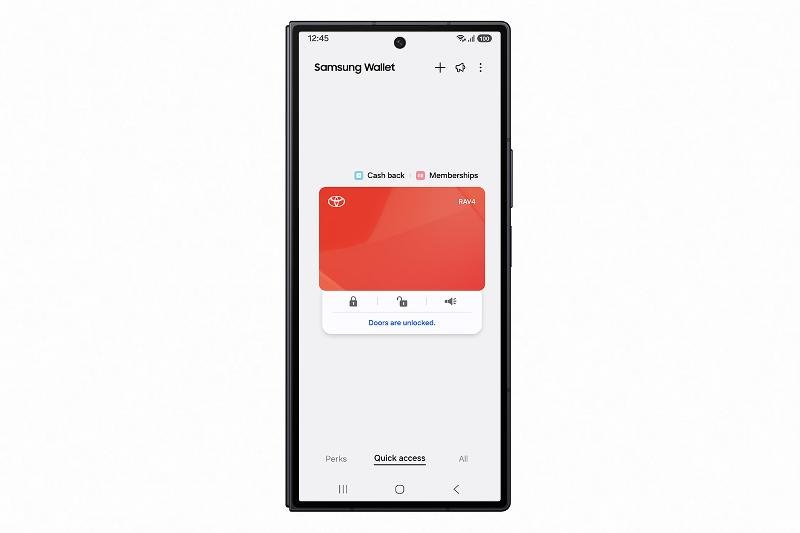
Samsung’s implementation, announced at MWC 2026, brings Aliro-based digital keys to Samsung Wallet. At launch in March 2026, it supports NFC tap-to-unlock on compatible Galaxy devices. UWB hands-free access is coming in April 2026 on select UWB-equipped Galaxy phones (Galaxy S24 Ultra and newer).
The Experience (NFC, for now)
The current Samsung experience mirrors what Apple had from 2021-2024: hold your Galaxy phone near the lock, authenticate via biometrics, and the deadbolt turns. It’s reliable and secure, protected by Samsung Knox with EAL6+ grade certification.
Once UWB rolls out next month, Samsung users should get the same hands-free convenience that Apple users already enjoy. The key difference: Samsung’s implementation is built entirely on the open Aliro standard, while Apple Home Key uses a proprietary protocol (though Apple also participates in Aliro).
The Hardware: Aqara U400
To test both ecosystems, I used the Aqara U400, launched at CES 2026 and one of the first locks to support Apple’s UWB Home Key alongside Aliro for Samsung and Google.
Specs
- Connectivity: Matter over Thread, Bluetooth LE, UWB, NFC
- Unlock methods: UWB hands-free (Apple), NFC tap (Apple/Samsung), fingerprint, keypad, NFC card, physical key
- Power: Rechargeable Li-Ion battery (up to 6 months per charge, per Aqara)
- Price: $269.99 USD
- Availability: US, Canada, Australia, New Zealand, Singapore
The U400 is a proper deadbolt replacement that feels like a premium product. The built-in fingerprint reader (stores up to 50 prints) is a nice backup, and the Matter over Thread connectivity means it works with Apple Home, Google Home, SmartThings, Alexa, and Home Assistant without extra hubs (you just need a Thread border router).
If you are building out a full Aqara ecosystem for 2026, you should also check our piece on the Aqara FP400 vs. FP2: Is the New 2026 Presence Sensor King Worth the Upgrade? to see how their mmWave tech pairs with these new locks.
Regional Nuances: The US vs. EU Divide
The smart lock market is still frustratingly split by door geography, and Aliro doesn’t fix hardware form factors.
In the United States: The deadbolt reigns supreme. Schlage’s new Sense Pro, unveiled at CES 2025, is the first Schlage lock with UWB support and Matter over Thread. It uses Schlage’s “Converge” technology to measure speed, trajectory, and motion for hands-free unlocking. Pricing hasn’t been announced yet, but it’s expected to ship in 2025. If you already own the older Schlage Encode Plus, that lock supports NFC Home Key but not UWB—and there’s no firmware path to add it.
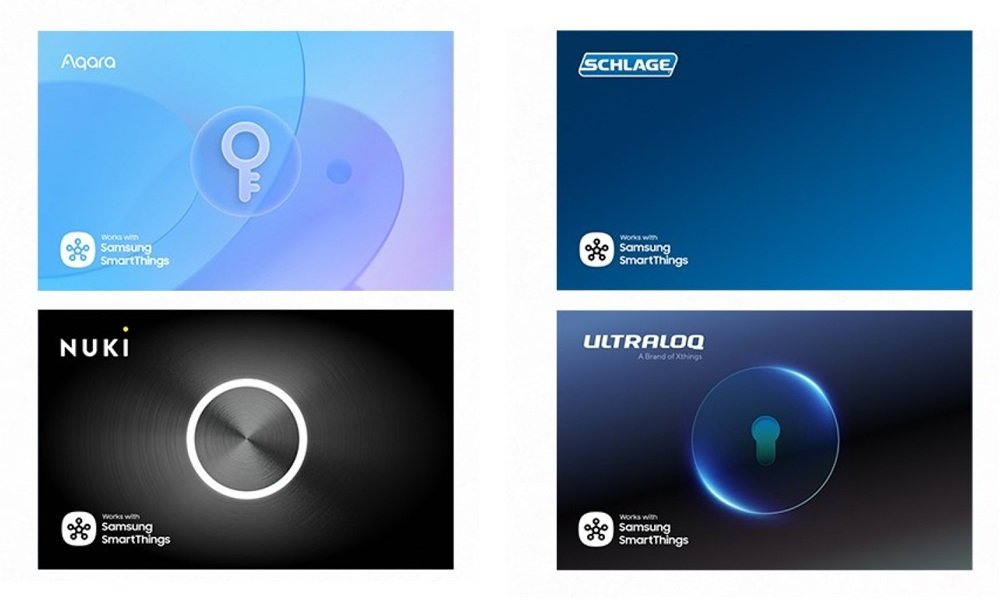
In Europe: European doors, with their multi-point locking systems and euro cylinders, require different hardware. Austrian manufacturer Nuki still leads here with the Smart Lock Ultra (released late 2024), which supports Matter over Thread and fits over existing euro cylinders. Samsung has listed Nuki as a Digital Home Key partner, so Aliro support should be coming, though Nuki hasn’t announced a timeline yet.
The Nuki Ultra’s brushless motor is impressively quiet in its “Insane” speed mode (under 1.5 seconds to unlock), but because it physically turns a cylinder, there’s inherently more mechanical lag than the Aqara U400’s direct-drive deadbolt. When you are carrying groceries, that difference is noticeable.
The “Groceries Test”
Here is the real-world scenario: You are carrying four bags of groceries. It is raining.
Apple Home Key with UWB (available now on Aqara U400): You walk up. Your iPhone is in your pocket. The lock detects your approach via UWB, verifies it’s you, and the deadbolt retracts before you reach the handle. You push it open with your elbow. You are inside.
Samsung Digital Home Key with NFC (March 2026): You have to awkwardly free a hand to hold your Galaxy phone near the lock reader. It works, but it’s not graceful. When Samsung’s UWB support arrives in April, this should match the Apple experience—but today, Apple has the edge.
Winner (today): Apple, thanks to its head start on UWB. By mid-2026, this should be a tie once Samsung’s UWB rolls out and more Aliro-certified locks hit the market.
The Security Question
Skeptics will ask: “Can someone relay the UWB signal and unlock my door?”
Both Apple’s and Aliro’s implementations use strict time-of-flight measurements via UWB. If the signal takes too long to bounce back—implying the phone is far away and the signal is being amplified or relayed—the lock refuses to open. UWB’s precise spatial awareness (measuring distance to within centimeters) makes relay attacks significantly harder than with Bluetooth-based proximity systems.
Samsung’s Digital Home Key adds Knox-level protection on the device side, while Apple leverages the Secure Element in iPhone and Apple Watch. Both approaches keep the credential isolated from the main operating system.
The Bottom Line
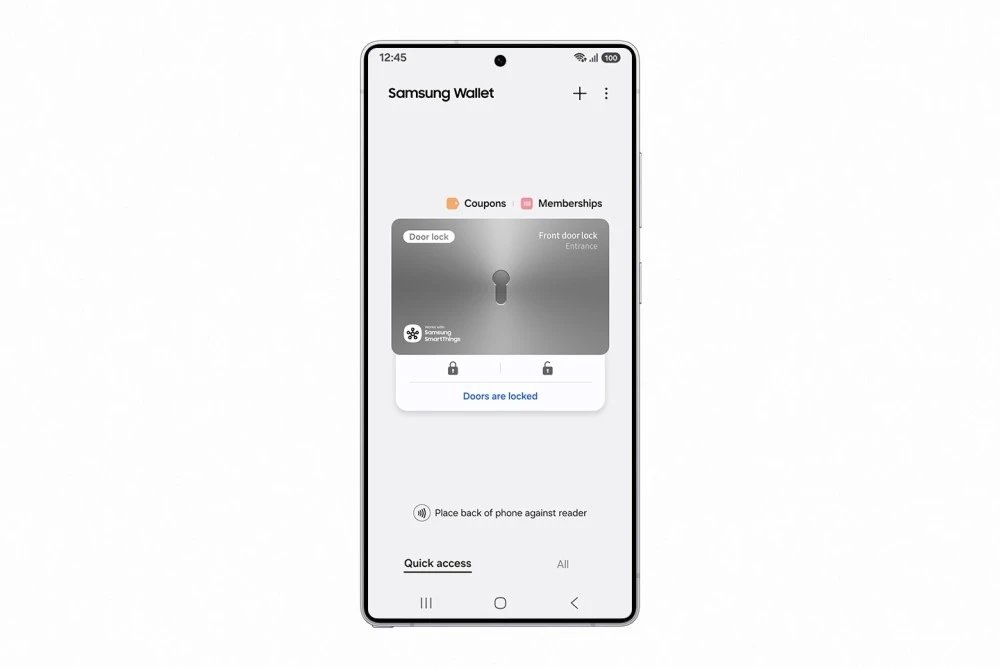
The arrival of Samsung’s Digital Home Key and the Aliro 1.0 standard marks a genuine turning point. For the first time, Android users get a proper wallet-based smart lock experience, and the Aliro standard ensures that your choice of lock no longer dictates your choice of phone.
Buy the Aqara U400 if:
- You want UWB hands-free unlocking today (currently Apple-only; Samsung UWB coming April 2026)
- You value the “walk up and it opens” experience above all else
- You live in a deadbolt market (US, Canada, Australia, Singapore)
Wait for the Schlage Sense Pro if:
- You want Schlage’s build quality with UWB and Matter over Thread
- You prefer to wait for a more established brand’s take on the technology
Go with the Nuki Smart Lock Ultra if:
- You’re in Europe with a euro-cylinder door
- You want Matter over Thread now and can wait for Aliro support later
The real winner here isn’t Apple or Samsung—it’s the Aliro standard itself. One lock, every wallet, every platform. That’s the upgrade worth getting excited about.