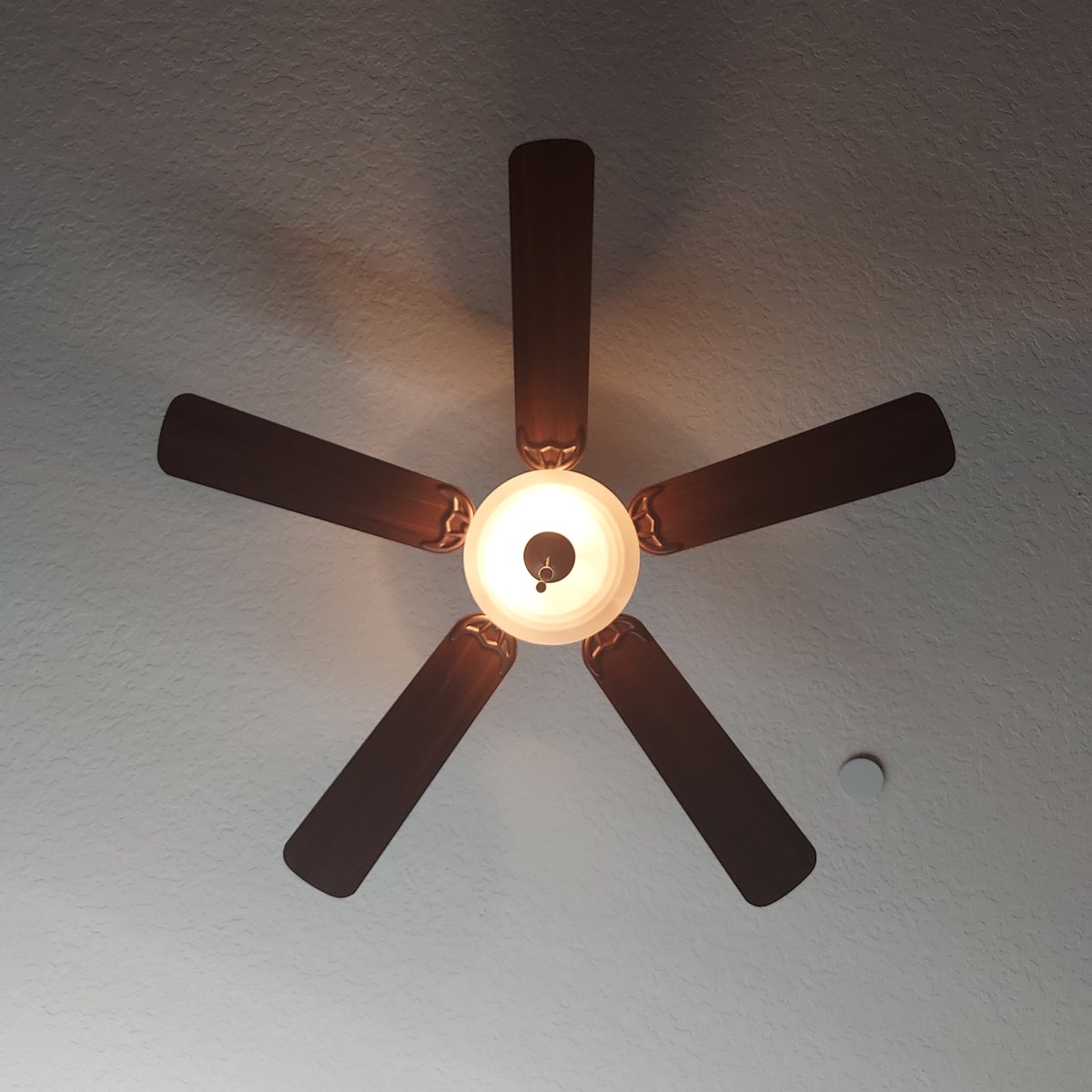
Ceiling fans have been the stubborn holdout of the smart home. While every light switch, sensor, and thermostat in your house has been swept into Matter’s tidy little ecosystem, the thing spinning above your head has mostly shrugged, blinked at its tiny remote, and kept whirring in analog. That’s finally changing in 2026 — and not in a half-measure, WiFi-as-a-fig-leaf kind of way.
Between Big Ass Fans quietly rolling Matter support out to its entire wired lineup, Hunter’s surprisingly ambitious HunterSMART launch at CES 2026, and retrofit bridges from Bond that can talk to the fan you already own, the category has gone from “frustratingly dumb” to “genuinely usable” in about eighteen months. If you’ve been putting off a ceiling fan upgrade because nothing fit your Apple Home, Google Home, or SmartThings setup, this is the year that excuse stops working.
Here’s the lay of the land, honestly appraised, with prices and protocol caveats where they matter.
Why ceiling fans were the last holdout
It’s worth pausing on why this took so long, because it explains a lot about what’s shipping now.
Traditional AC ceiling fans rely on a cheap RF remote and a receiver hidden in the canopy. There’s no microcontroller, no network stack, nothing to bolt a smart radio onto without basically redesigning the fan. Retrofit solutions — Bond Bridge being the best-known — worked by imitating the RF remote, which is clever but leaves you without real state feedback. You could tell the fan “speed 3,” but you had no confirmation it actually listened.
The newer wave of premium ceiling fans uses DC motors with integrated control boards, which is what makes real two-way smart control possible. It also made the fans expensive, which is why smart ceiling fans have historically been a $500+ category dominated by a handful of brands.
Matter didn’t magically fix any of this. But it did give the few companies with DC-motor fans and real firmware a reason to finally commit to a shared standard, instead of trapping buyers in yet another brand app.
Big Ass Fans: Matter over WiFi, finally here
If you’ve ever walked into a restaurant with a genuinely huge, weirdly quiet ceiling fan, there’s a decent chance you were looking at a Big Ass Fans unit. Their consumer line — led by the Haiku L and the industrial-chic i6 — has been flirting with smart home integration for years, but mostly through brand-specific apps and a patchwork of SmartThings/Alexa hooks.
In late 2024 the company announced Matter support was coming, and throughout 2025 it rolled out across the lineup: Haiku, Haiku L, Haiku Coastal, i6, es6, Turbo6, and Speakeasy, plus every new WiFi-enabled fan going forward. The implementation is Matter over WiFi — not Thread — which is the single biggest caveat here. Your fan won’t join the Thread mesh you’ve so carefully built around your locks and sensors; it’ll sit on 2.4GHz like a smart plug. In practice that’s fine for a fan (it isn’t moving around the house), but purists should know going in.
The Haiku L is the one most people should look at. It’s a 52-inch fan with a DC motor, integrated LED with sixteen brightness settings, seven speed settings, and a “Whoosh” mode that mimics natural breeze variation. You can buy the 52-inch model directly from Big Ass Fans or through The Home Depot. Expect to pay $750 to $1,100 depending on finish — matte black, glossy white, cocoa, or caramel — with larger diameters and outdoor-rated versions climbing past $1,400.
Is it worth it? If you’re coming from a $150 Home Depot fan, the silence alone will sell you. Big Ass Fans sound-test every unit in an anechoic chamber, and the difference is obvious: no click at low speed, no hum when the light dims, no wobble on a slightly off-balance blade. The Matter integration shows up in Apple Home as a standard fan accessory with speed control and a dimmable light — no separate bridge required if you have a current Apple TV 4K or HomePod acting as your Matter controller.
The honest downsides: Matter over WiFi means latency when the home network is congested, and there’s still no Thread migration path on the roadmap. If Thread support is a dealbreaker for you, you’re waiting another generation.
Hunter’s HunterSMART: the mainstream play
Hunter Fan Company is the opposite story from Big Ass Fans — a mass-market brand with a century of product inertia, not a boutique DC-motor shop. That’s exactly why their CES 2026 announcement was more interesting than I expected.
The HunterSMART portfolio, launching Spring 2026, is built on Matter from the ground up. Three pieces matter here:
1. The ZenTech ceiling fan series. Hunter’s first genuinely from-scratch smart ceiling fan design, using a DC motor that Hunter claims is roughly 43 percent slimmer than their previous smart fans. It ships with Matter support for Apple Home, Google Home, Amazon Alexa, and SmartThings out of the box. Hunter hasn’t released pricing yet, but based on their existing smart fan lineup — models like the Symphony and Dempsey currently run $280–$450 — the ZenTech will likely slot into a $400 to $700 range. Substantially cheaper than Haiku L, in other words.
2. The Smart Fan Upgrade Kit. This is the quiet hero of the announcement. It’s a retrofit module designed to bring Matter control to most existing AC ceiling fans — Hunter’s or otherwise — without replacing the fan or rewiring the ceiling. You swap the internal receiver, reuse the existing wiring, and pair it into HunterSMART. If it delivers on what Hunter is showing, this is the first mainstream retrofit that doesn’t involve a separate bridge on a shelf.
3. The Smart Wall Panel. A touchscreen wall controller with built-in Alexa voice support, designed to replace your existing fan switch. The demo units at CES showed direct control of speed, direction, and light, plus scene triggers. Useful if you have guests who’d rather poke a screen than summon Siri.
The pricing and exact availability haven’t been confirmed yet — Hunter said Spring 2026 at CES, so we’re in the window. I’d wait for real reviews before buying a ZenTech sight unseen, but the Smart Fan Upgrade Kit is worth watching closely if you have a Hunter fan you like and don’t want to throw it out.
Minka-Aire: the “smart, but not Matter” middle ground
If your budget for a ceiling fan tops out well under Haiku L territory, Minka-Aire is where most shoppers end up, and it remains a genuinely solid value line. The Sleek, Artemis, and Concept IV smart fans run $350–$780 on Home Depot and Lowe’s, and the F868L Sleek 60-inch with DC motor is a longtime favorite for good reason — it’s quiet, it’s efficient, and it looks expensive.
The catch: Minka-Aire hasn’t committed to Matter. Current smart Minka fans use Bond-powered RF or a first-party WiFi module, and integrate with Alexa, Google Home, Nest, and Ecobee — but not natively with Apple Home or SmartThings. If you’re deep in the Google ecosystem, you won’t notice a thing. If you’re an Apple Home household, you’ll need a workaround (usually Homebridge running on a spare Raspberry Pi or an Apple TV), and that’s a solution I only recommend to people who enjoy tinkering.
For most buyers, Minka-Aire in 2026 is still a good fan with incomplete smart home support. If Matter isn’t a hard requirement for you, it’s the pragmatic pick. If it is, skip to the next section.
Bond Bridge Pro: the retrofit escape hatch
For everyone who doesn’t want to replace a perfectly good ceiling fan, the Bond Bridge Pro is the right answer. It’s a $379 RF-and-IR controller that learns your existing fan remote’s signals, then exposes the fan to Alexa, Google Home, and SmartThings as a cloud-connected device. The Pro adds Ethernet with PoE, a 3,500 sq ft coverage area, and support for up to fifty fans or motorized shades from one bridge — genuinely designed for whole-house use. The original Bond Bridge is $99 if you just need to cover a room or two.
The Matter question is where things get messier. Bond added Matter support in a beta program in late 2024 and expanded it through 2025, but native HomeKit and Matter support for ceiling fans specifically is still spotty on the Bond side as of early 2026. Shades and fireplaces are better served. For Apple Home ceiling fan control via Bond today, most users still end up on a Homebridge plugin — which works, but it’s the same tinkering penalty as Minka-Aire.
What Bond does beautifully: multi-speed control, direction reversal, and light control from a single bridge for almost any RF or IR fan on the market. Hunter, Minka-Aire, Harbor Breeze, Hampton Bay — if it came with a remote, Bond can probably learn it. That’s a remarkable capability if you’ve inherited fans from four different builders across two houses, which, realistically, a lot of people have.
Where Thread fits in — and where it doesn’t
None of the fans above support Thread. All of them are either Matter over WiFi (Big Ass Fans, Hunter’s upcoming ZenTech) or cloud-to-cloud bridges (Bond, Minka via Alexa).
For a ceiling-mounted device that never moves and has constant AC power, that’s honestly fine. Thread’s strengths — battery life, mesh resilience, low latency for sensors — are wasted on a device that’s plugged into mains. WiFi congestion can cause occasional lag, but nothing a modern WiFi 6E or 7 access point can’t absorb.
The one place this matters: if you’re using a fan in a mesh-critical automation, like “turn on the fan when the presence sensor sees someone and the temperature crosses 78°F.” WiFi latency of 200–500ms is usually imperceptible, but you’ll occasionally feel it. If that bothers you, build in a half-second delay in the automation, and you’ll never notice again.
What to actually buy in 2026
If you want the best and price doesn’t matter: Big Ass Fans Haiku L. Matter over WiFi, DC motor, dead silent, properly integrated into Apple Home and every other major platform. $750–$1,100 for the 52-inch.
If you want mainstream-priced Matter: Wait eight to twelve weeks for Hunter’s ZenTech and HunterSMART lineup to actually ship and get reviewed. The promise is great; the delivery is unproven. If the retrofit Upgrade Kit works as demoed, it’ll be the best deal in the category.
If you want a great fan and you’re on Google or Alexa: Minka-Aire Sleek or Concept IV. Excellent hardware, mature smart integration for those ecosystems, reasonable $350–$780 pricing.
If you already own a ceiling fan and don’t want to replace it: Bond Bridge ($99) or Bond Bridge Pro ($379) for whole-house control. Expect to use a Homebridge plugin if you’re on Apple Home.
If you’re shopping for a whole new smart home build: Pair a Haiku L with a Matter-compatible hub like the Aqara M3 or an Apple TV, and treat the fan as a first-class citizen in your automations. That’s where the 2026 upgrade actually pays off — a fan that triggers automatically alongside your locks, sensors, and lights without a single tap on a remote. And if you’re renting — where drilling a fan into a ceiling isn’t on the table — the Bond Bridge pairs nicely with the no-drill smart home devices we’ve covered for renters.
The bottom line
Smart ceiling fans spent a decade being an embarrassing footnote in the smart home story. You’d show your friends the locks, the lights, the presence sensors, the cameras — and then gesture sheepishly at the remote on the coffee table for the fan. In 2026, that finally stops being true. Big Ass Fans got Matter right (if expensively), Hunter is about to make it affordable, and Bond keeps the old-fan faithful covered.
It’s not a perfect revolution. Thread is still missing. Pricing is still high at the top end. And Hunter’s roadmap is still a promise, not a product. But for the first time, a smart home without a smart ceiling fan looks like a choice, not a limitation.