Smart bulbs get all the attention, but in most rooms the biggest light isn’t a bulb at all. It’s a flush-mount fixture in the middle of the ceiling, or a grid of recessed downlights, and more and more of those have integrated LEDs and no socket to screw a smart bulb into. If you want that light to be smart, you have to replace the fixture.
2026 is the first year that’s been a genuinely good idea. Govee shipped a 5,000-lumen pixel-matrix ceiling light that speaks Matter. Philips Hue quietly gave its Slim downlight a Thread radio. Aqara used IFA to announce a Thread-and-Zigbee downlight. And LIFX’s Matter-certified ceiling light now costs less than a pair of premium bulbs (when you can find it in stock).
But a ceiling fixture isn’t a bulb. You’re wiring it in, you’ll live with it for a decade, and the dumb switch on the wall can undo all of it. Here’s what’s worth buying, and the one wiring decision that matters more than any spec sheet.
The short version
| Light | Type | Price (USD) | Max brightness | Connectivity | Hub needed? |
|---|---|---|---|---|---|
| Govee Ceiling Light Ultra | 21" flush mount | ~$210–$250 | 5,000 lm | Wi-Fi, Matter 1.3 | No |
| LIFX SuperColor Ceiling 15" | 15" flush mount | $79.97 | 2,850 lm (white trim) | Wi-Fi, Matter | No |
| Aqara Ceiling Light T1M | Flush mount + RGB ring | $149.99 | Not the point (see below) | Zigbee 3.0, Matter via hub | Yes, Aqara Zigbee hub |
| Philips Hue Infuse | Flush mount | ~$280 | ~2,300 lm | Zigbee via Hue Bridge, Matter via bridge | Yes, for full features |
| Philips Hue Slim Downlight 6" | Canless recessed | $76.99 | 1,200 lm | Zigbee, Bluetooth, Matter over Thread | No (Thread border router for Matter) |
| Aqara LED Downlight T2 | Ultra-thin recessed | Not announced | Up to 1,200 lm (white-only model) | Thread + Zigbee, Matter | No (Thread border router) |
Prices are US list or typical street prices at the time of writing; ceiling fixtures get discounted constantly, and Hue in particular has been raising prices this year.
First decision: fixture, downlight, or just a bulb?
Before comparing products, work out which of three categories you’re actually shopping in.
Smart bulbs in your existing fixture. If your ceiling light takes a standard E26/E27 or B22 bulb, this is still the cheapest and least committal route. Our smart bulb showdown covers it. The catch: most bulbs top out around 800 to 1,600 lumens, and a single bulb in a big living room looks like a single bulb.
Integrated-LED flush mounts. One wiring job replaces the whole fixture. You get far more light from one point (2,000 to 5,000 lumens), better diffusion, and decorative tricks like colour rings and pixel effects. The downside is that when the LEDs or driver fail, the whole fixture is landfill.
Recessed downlights. These come in two flavours. Retrofit downlights screw into an existing can using an E26 adapter. Canless (or “wafer”) downlights are thin discs with a small junction box that sit directly in a hole cut in the drywall, which is the right choice for new builds, renovations, and low ceilings with no room for a can. Downlights mean many lights per room, and that changes the networking maths (more on that below).
A rough brightness rule of thumb: plan on about 10 to 20 lumens per square foot for living spaces and more for kitchens and workspaces. Govee rates its 5,000-lumen Ultra for rooms of 200 to 300 square feet, which lands in exactly that range.
The flush mounts
Govee Ceiling Light Ultra: the show-off
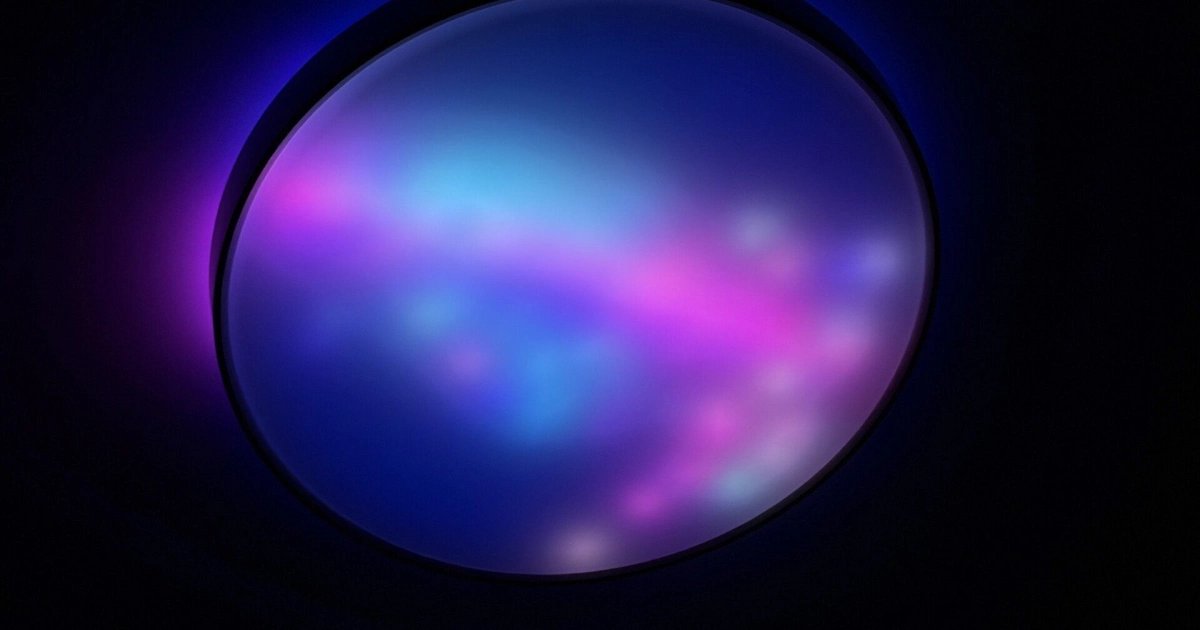
Announced at CES 2026, the Ceiling Light Ultra is a 21-inch disc with a 616-LED matrix behind the diffuser, a separate ring that throws a halo onto the ceiling, and a claimed 5,000 lumens. Whites run from 2700K to 6500K with a CRI of 95, and it dims down to 1%, low enough to act as a night light. The matrix can display pixel art and animated scenes, which is either the best or worst thing about it depending on who you live with.
It’s also Matter-certified (Matter 1.3, over Wi-Fi), so it pairs straight into Apple Home, Google Home, Alexa, SmartThings or Home Assistant without a Govee hub. MatterAlpha’s May 2026 review found onboarding painless, but also found the limits. Matter merges the main panel and the backlight ring into a single light, so changing the colour in Apple Home changes both. There’s no Adaptive Lighting. And the reviewer saw occasional slow or unresponsive control over Matter. The pixel effects, segment control and animations only exist in Govee’s own app.
Our take: this is the most impressive ceiling light you can buy for the money, as long as you treat Matter as the “on, off, dim, include in scenes” layer and the Govee app as the place for the fun stuff. Install tip: the mount’s orientation sets which way images on the panel face, so line it up before tightening. Govee also sells a sibling, the Sky Ceiling Light (21 inches, up to 5,200 lumens, also Matter), which imitates a skylight rather than displaying pixel art.
LIFX SuperColor Ceiling 15": the bargain, if you can get one
The LIFX SuperColor Ceiling is the value pick on paper. The 15-inch white-trim model is listed at $79.97 on LIFX’s US store and puts out 2,850 lumens (the black-trim version is rated at 2,500). It has 57 individually addressable colour zones, a huge 1500K to 9000K white range, and it’s Matter-certified over 2.4GHz Wi-Fi with no hub.
Two caveats. First, CRI is listed at 80, against the Govee’s 95. That’s fine for a hallway or bedroom, but colours (and skin tones) look noticeably flatter under it. Second, availability: at the time of writing LIFX’s own store showed the white-trim model as sold out with a restock alert. If you see it at this price, it’s a great buy. Don’t plan a renovation around it.
Aqara Ceiling Light T1M: for Aqara homes
The T1M has a white main panel for general lighting plus an RGB ring around the edge, and Aqara’s clever trick is using that ring as a status display. Have it glow red when a door is left unlocked or a window sensor is open, for example. It launched in the US at $149.99, and in Asia it’s stocked by Aqara specialists such as HomeSmart.
It runs on Zigbee 3.0, so it needs an Aqara Zigbee hub such as the M3 or M2, and reaches Matter by being bridged through that hub. If you already have an Aqara hub, that’s a strength. The light joins the same Zigbee mesh as your sensors and switches, and automations with Aqara gear stay fast. If you don’t, the hub adds cost and another app.
Our take: the best choice if Aqara is already your ecosystem. Otherwise it’s hard to justify over the Govee.
Philips Hue Infuse: the safe premium
The Hue Infuse is a round flush mount that lights the room downward while also washing the ceiling around it in colour, with just over 2,300 lumens peak. It’s a classic Hue product: excellent colour quality, the best app and automation ecosystem in lighting, and a price to match (around $280 at US retailers).
The hidden cost is the bridge. Hue fixtures reach Matter through the Hue Bridge, and the Bridge Pro’s US price rose from $99 to $139.99 this summer, with bigger rises in Europe and the UK. If you already own a bridge, the Infuse is a safe, beautiful upgrade. If you don’t, a single Hue ceiling fixture costs more than $400 once you include the bridge, and the Govee looks a lot more attractive. If you do buy into Hue, our Bridge Pro review explains why the newer bridge is worth it.
The downlights
Philips Hue Slim Downlight: now with Thread
The quiet news of 2026 is that Hue refreshed its Slim recessed lights with a new radio. As Hueblog reported in June, the new chip keeps Zigbee (for the Hue Bridge) and Bluetooth (for app control without a bridge), and adds Matter over Thread, so the light can join Apple Home, Google Home or Home Assistant directly through any Thread border router. The colour temperature range also stretches from 2,000–6,500K to 1,000–20,000K, though Hueblog notes the difference is hard to see.
In the US, the Slim Downlight 6" lists at $76.99. It’s a canless design needing a 6-1/8-inch cutout, is wet-location rated (IP44) for bathrooms and covered porches, and is rated at 1,200 lumens. Read the fine print, though: that’s at 4000K. At a warm 2700K, Hue’s own spec drops to 720 lumens. If you like warm evening light, and most people do, plan your downlight spacing around the warm figure, not the headline one. In Europe the equivalents are the 9cm (1,000 lumens) and 17cm (1,500 lumens) Slim recessed lights.
Our take: this is now the most flexible recessed downlight you can buy. It works with a Hue Bridge, without one over Bluetooth, or natively over Thread. That last option means you aren’t locked into Hue’s ecosystem if you change your mind later.
Aqara LED Downlight T2: the one to watch
At IFA 2026, Aqara announced the LED Downlight T2 as part of a five-product lighting push. It’s an ultra-thin recessed light aimed at shallow ceilings, in two versions: an RGB-plus-white model (2,000K to 9,000K) and a white-only model rated at up to 1,200 lumens. It supports both Thread and Zigbee, with Matter. Over Thread it needs no Aqara hub, only a Thread border router; over Zigbee it plugs into the Aqara sensor-and-automation world. It also remembers its last state after a power cut.
What Aqara hasn’t announced is a price or a release date. On paper it’s a direct Hue Slim rival; we’ll judge it when it ships.
WiZ and Nanoleaf: the hub-free alternatives
WiZ (Signify’s Wi-Fi brand, the same parent company as Hue) sells a Slim Color downlight in a 6-inch size that’s Matter-certified over 2.4GHz Wi-Fi, wet-location rated, and peaks around 1,000 lumens.
Nanoleaf’s Essentials Matter downlight was the first recessed light to use Matter over Thread: a 4-inch, 700-lumen design that needs a Thread border router. It’s still a good light, but stock is patchy, so check availability in your region before you plan around it.
Wi-Fi vs. Thread matters more in the ceiling than anywhere else
One ceiling light on Wi-Fi is fine. Eight downlights in a kitchen plus six in the living room is fourteen more clients on your 2.4GHz network, all of them always on, all of them chattering. That’s where Thread and Zigbee earn their keep. Mains-powered Thread and Zigbee lights act as routers, so every downlight you add makes the mesh stronger and extends range to your battery-powered sensors, instead of putting more load on your Wi-Fi.
Our rule of thumb:
- One or two big fixtures: Wi-Fi is fine. The Govee and LIFX are the easy choices.
- A room full of downlights: go Thread (Hue Slim, Aqara T2) or Zigbee (Hue via bridge, Aqara via hub).
- Sticking with Wi-Fi anyway: put the lights on a separate IoT network. Our smart home Wi-Fi guide explains how.
Thread lights also need a Thread border router: a recent HomePod or Apple TV 4K, a Google Nest hub, or a compatible Echo or SmartThings hub. Because they’re Matter devices, you can share them to more than one ecosystem at once. See our Matter multi-admin guide if your household is split between Siri and Google.
The wall switch problem (read this before you buy anything)
Here’s the issue nobody puts on the box: a smart ceiling light is only smart while it has power. The moment someone flips the wall switch off, your Matter light disappears. Automations fail silently, voice assistants say the device isn’t responding, and the next person to walk in flips it back on, getting full brightness at whatever colour it defaulted to.
You have four ways to fix it, from best to cheapest:
- Replace the switch with a smart switch that can keep the power on. Inovelli calls this Smart Bulb Mode. Aqara switches such as the Z1 Pro let you decouple a button from its relay. Either way, the fixture stays powered and the paddle becomes a remote that sends commands. Our Inovelli vs. Aqara Z1 Pro comparison covers both, including the neutral-wire question at the switch box.
- Put a battery remote over the old switch. Lutron’s Aurora clamps over a standard toggle and works with Hue. Hue’s own dimmer switch, or any scene controller from our smart button showdown, can be mounted beside it.
- Wire a module behind the switch. Hue’s Wall Switch Module turns an existing switch into a Hue remote, provided the light’s circuit is rewired to stay permanently powered.
- Tape, or a switch guard. Inelegant, but it works for a rental or a guest room.
Two related warnings. Never install an integrated smart fixture behind a traditional wall dimmer. Dimmers chop the power waveform, and LED drivers respond with flicker, buzzing, or an early death. Replace the dimmer with a plain switch or one of the options above. And set the power-on behaviour. After a power cut, you want lights to come back in their last state, or at least in a sensible warm white, not blasting 6500K at 3am. The Hue app has a per-light power-on setting, Aqara’s T2 has power-off memory built in, and our blackout guide covers keeping the rest of your smart home up during an outage.
Finally, the wiring: ceiling boxes almost always have a neutral, so the fixture swap itself is simple. But in some countries, including Australia, fixed wiring is legally an electrician’s job.
The verdict
- Best for big living rooms: Govee Ceiling Light Ultra. 5,000 lumens, CRI 95 and genuinely striking effects, provided you accept that Matter only exposes the basics.
- Best value: LIFX SuperColor Ceiling 15". At $79.97 with Matter and 2,850 lumens it’s a steal. If you can find one.
- Best for Aqara homes: Aqara Ceiling Light T1M. The status ring is a real feature, and it lives on the same Zigbee mesh as your sensors.
- Best for existing Hue homes: Philips Hue Infuse. Gorgeous, reliable, expensive, and much less appealing if you still need to buy a bridge.
- Best recessed downlight: Philips Hue Slim Downlight. Zigbee, Bluetooth and now Thread in one canless light. Size your room around the 720-lumen warm-white figure.
- Worth waiting for: Aqara LED Downlight T2. Thread, Zigbee and a thin profile, but no price yet.
And whichever light you choose, sort out the wall switch first.