Two years ago, the Connectivity Standards Alliance dropped Matter 1.3 with a headline promise: EV chargers were in the spec. Energy management, scheduling, load balancing, solar prioritization — all of it standardized, all of it cross-platform. Plug your charger in, pair it with HomeKit or Google Home or Alexa, and stop juggling a fourth app on your phone.
It’s May 2026. Matter 1.5 is out. And the EV charger you can actually buy at Home Depot still doesn’t speak Matter.
So if you’re shopping for a Level 2 home charger right now — and a lot of you are, with NACS adapters finally turning the US market into one big plug standard — what should you actually buy? Here’s the honest state of the smart EV charging market: who has the best app, who plays nicely with what, and whether to wait for Matter at all.
The Matter EV charger situation, briefly
Matter 1.3 added EVSE (electric vehicle supply equipment) as a device type in May 2024. The spec covers everything serious chargers already do — start/stop, schedule by departure time, load balancing, solar-priority charging — and wraps it in a standard that lets Apple Home, Google Home, SmartThings, and Home Assistant talk to the box without each manufacturer building separate integrations.
What’s missing is the box itself. The first Matter-certified EVSE device showed up in the CSA’s certification database in late 2024, but it was a 4-channel marine switching controller — not a consumer wall charger. UK firm geo and Connected Kerb announced a Matter-enabled home charging stack for the GB smart meter rollout, but that’s a UK utility play, not something you’ll find at Lowe’s.
In the US — where most home charging happens — the big five (ChargePoint, Wallbox, Tesla, Emporia, Enphase) have all said the right things about Matter and shipped none of it. Their reasoning isn’t mysterious: each runs a sticky in-house app, a utility demand-response program, and (for Tesla and Enphase) a vertically integrated energy ecosystem. Matter standardizes away the moat. Expect them to drag.
The practical takeaway: don’t buy for Matter today. Buy for the ecosystem you already live in, and treat any future Matter firmware update as a bonus. If that’s annoying, it’s also the same situation we hit with smart air purifiers and robot lawn mowers — Matter looks great on paper, but the categories that need it most are the slowest to ship it.
ChargePoint Home Flex — the safest pick
Price: $549 hardwired, ~$599 NEMA 14-50 plug-in. Up to 50A / 12 kW.
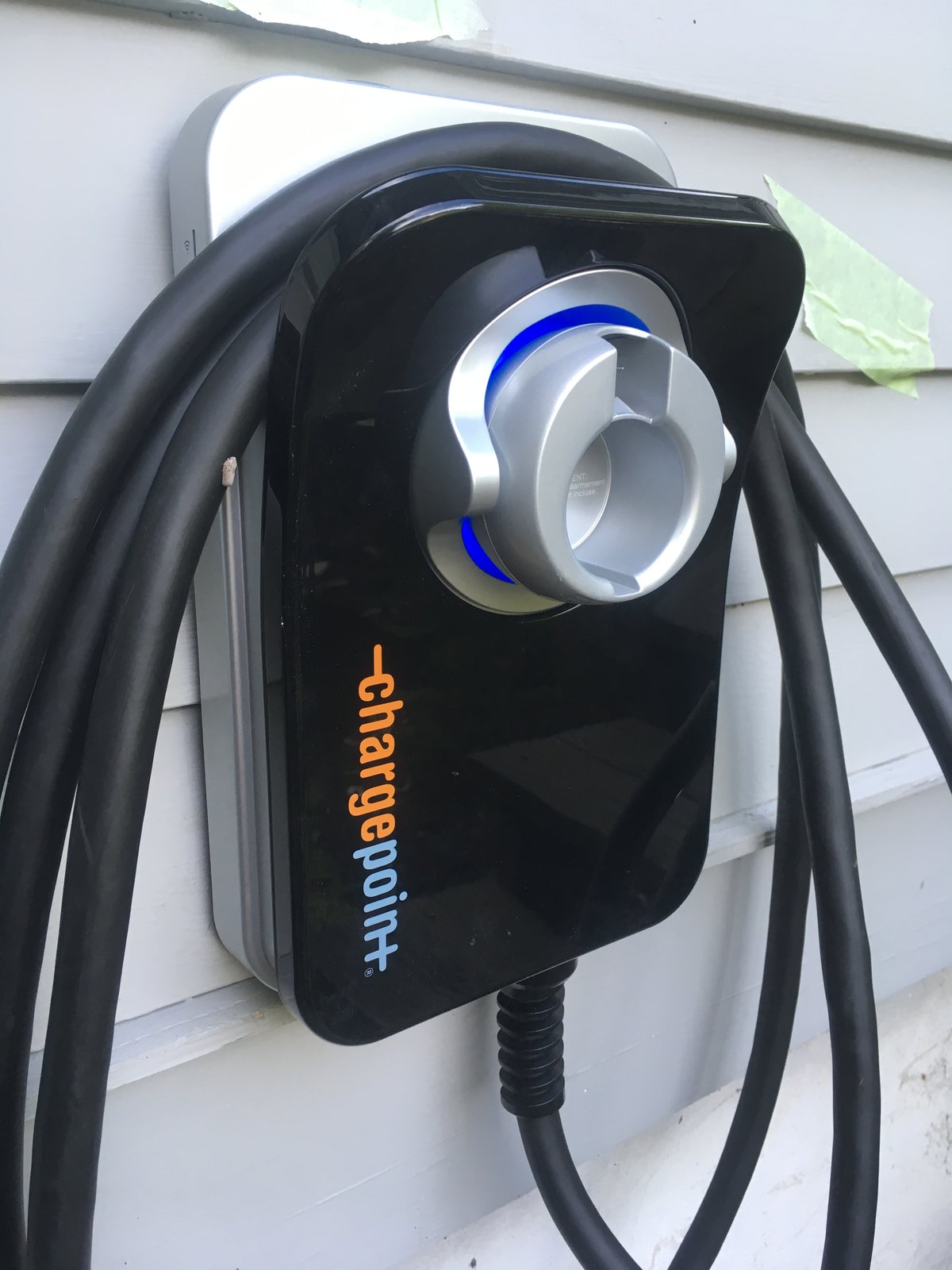
The ChargePoint Home Flex is the easiest charger to recommend if you don’t already own a Tesla or an Enphase solar system. It’s the second-generation Home Flex, available in both J1772 and NACS connector versions, with adjustable amperage from 16A to 50A so it fits whatever circuit your panel actually has spare. Cable is 23 feet, Energy Star certified, 3-year warranty.
What makes it the default choice is the app. ChargePoint runs the largest public charging network in North America, and that same app handles your home unit and every Level 2/DC fast charger you’ll see at a Whole Foods parking lot. Schedule charging for off-peak rates, see lifetime miles added and cost per session, set up reminders to plug in. Alexa and Google Assistant integrations exist; Apple Home does not, except through Home Assistant. Wi-Fi only — no Ethernet, no Thread.
The hardware is also genuinely good. The connector holster has a tapered, backlit entry that swivels for easy reholstering — small thing, but you notice it every night in a dark garage. Reviewers at EnergySage and InsideEVs tested it down to -18°F and the cable stayed pliant. UL listed for indoor and outdoor.
If you want one charger that just works, plays with whichever voice assistant you already have, and has a parent company that isn’t likely to disappear, this is it.
Tesla Universal Wall Connector — buy it if you have a Tesla, consider it if you don’t
Price: $550–$600. Up to 48A / 11.5 kW. NACS + J1772 in one unit.
Tesla’s Universal Wall Connector is the only mainstream home charger with both NACS and J1772 connectors physically integrated — a “Magic Dock”-style design borrowed from Tesla’s Supercharger network. Pull the cable out and it’s NACS; pull the J1772 adapter off its dock on the side, snap it onto the NACS handle, and you can charge a Mach-E or an Ioniq 5 without a loose adapter floating around the garage. Teslarati covered the launch as the closest thing to a real plug-standard answer until every non-Tesla switches to NACS in 2026–2027.
For Tesla owners — Model Y, Model 3, Model S, Model X, or Cybertruck — this is the obvious buy. The Tesla app integration is tighter than any third-party charger’s: charging schedules, cost tracking, and (Cybertruck only) Powershare bidirectional support, which lets the truck back-feed your home during an outage for up to three days when paired with a Tesla Gateway.
For non-Tesla owners, it’s still a strong pick, but you lose the deep app integration — your Bolt EV or Lightning shows up in the Tesla app as a generic “Other vehicle” session. No Alexa, no Google Assistant, no Apple Home, no Matter. If you don’t have a Tesla account, the ChargePoint is the smarter buy.
Recently dropped to $550 on Amazon, which makes it cheaper than the comparable Wallbox Pulsar Plus 48A on Amazon.
Wallbox Pulsar Plus — the compact one, with real load balancing
Price: $679–$800. Up to 48A / 11.5 kW. J1772 (or NACS).
The Wallbox Pulsar Plus wins on two specific axes: it’s physically the smallest Level 2 charger I’ve measured against (smaller than a shoebox), and it has the best multi-charger load balancing in the consumer tier. Power Sharing lets two Pulsars share a single 60A circuit and automatically split the load between two vehicles — useful in the increasingly common two-EV household where rewiring for a second 60A run costs more than the charger itself. Power Boost adds whole-home dynamic load management via Wallbox’s add-on CT clamp, so the charger throttles when your oven and dryer are pulling, instead of tripping the main.
Assembled in Arlington, Texas. Energy Star and UL certified. 25-foot cable. Wi-Fi and Bluetooth, Alexa and Google Assistant. No Apple Home. No Matter. Wallbox has a public roadmap that mentions Matter eventually, but they’ve been saying that since 2024.
The downside: the app is rougher than ChargePoint’s, with periodic reports of cloud outages knocking out scheduled charging. If you live somewhere with cell coverage issues or just don’t love cloud dependencies, this isn’t the one.
Emporia Pro — best if you want whole-home energy data, too
Price: $599. Up to 48A / 11.5 kW hardwired, 40A / 9.6 kW on NEMA 14-50.
Emporia’s Pro Level 2 charger is the move if you already have — or are willing to install — an Emporia Vue energy monitor in your panel. The Pro pairs natively with the Vue, so the same app shows you “Tesla added 31 kWh tonight at an average draw of 9.4 kW; total household consumption was 47 kWh; HVAC was 14 kWh of that.” It’s the most honest end-to-end energy picture you can get from a sub-$800 home charger.
Charged EVs covered the Pro launch and called out the integrated PowerSmart load management — same idea as Wallbox’s Power Boost, but with three included 200A CT clamps (expandable to sixteen 50A clamps) for circuit-level visibility. The unit measures up to 3,000 times a second and throttles in 1A increments. Ethernet port in addition to 2.4 GHz Wi-Fi, which matters if your garage is a Wi-Fi dead zone.
Connector is NACS or J1772, depending on which SKU you order. 25-foot cable. Alexa and Google Assistant. No Apple Home. No Matter.
The catch: Emporia’s app is fine for the data-curious but not as polished as ChargePoint’s, and the Vue ecosystem only fully unlocks the picture if you buy and install the panel-clamp monitor (another ~$170). If you want one box that you forget about, ChargePoint. If you want to know which circuit is wasting how many watts, Emporia.
Enphase IQ EV Charger 2 — only buy this if you have Enphase solar
Price: ~$700–$900 depending on power tier. Up to 64A / 13.3 kW residential.
The Enphase IQ EV Charger 2 is in the lineup for one reason: if you already have Enphase IQ microinverters and an IQ Battery, this charger slots in as the fourth piece of that puzzle. The Enphase app then runs a single optimization across solar production, battery state of charge, grid prices, and EV charging — checking every 30 seconds and ramping in 1A increments to absorb surplus solar instead of exporting it for pennies.
For everyone else, it’s overpriced and over-featured. The 9.6 kW J1772 unit is fine, but you’re paying for the Enphase ecosystem you don’t have. Just buy a ChargePoint.
NACS and J1772 versions. 5-year warranty. Wi-Fi, plus a cellular-equipped commercial variant (22.1 kW, 80A) for businesses. No Matter — and given Enphase’s strategy of running its own energy stack end-to-end, don’t hold your breath.
What to actually buy in 2026
If you have a Tesla → Tesla Universal Wall Connector. Best app integration with your car, and the only path to bidirectional charging with a Cybertruck and Tesla Gateway.
If you have Enphase solar + battery → Enphase IQ EV Charger 2. The whole-stack solar/battery/EV optimization is worth the premium only inside that ecosystem.
If you have two EVs on one circuit → Wallbox Pulsar Plus (two of them). Best-in-class load sharing without a panel upgrade.
If you want circuit-level home energy visibility → Emporia Pro plus a Vue panel monitor. The most data per dollar.
Everyone else → ChargePoint Home Flex. Best app, biggest public charging network on the same app, indoor/outdoor rated, NACS or J1772, and the easiest unit to live with for the five-plus years before any of these brands actually ship Matter.
So, when does Matter actually show up?
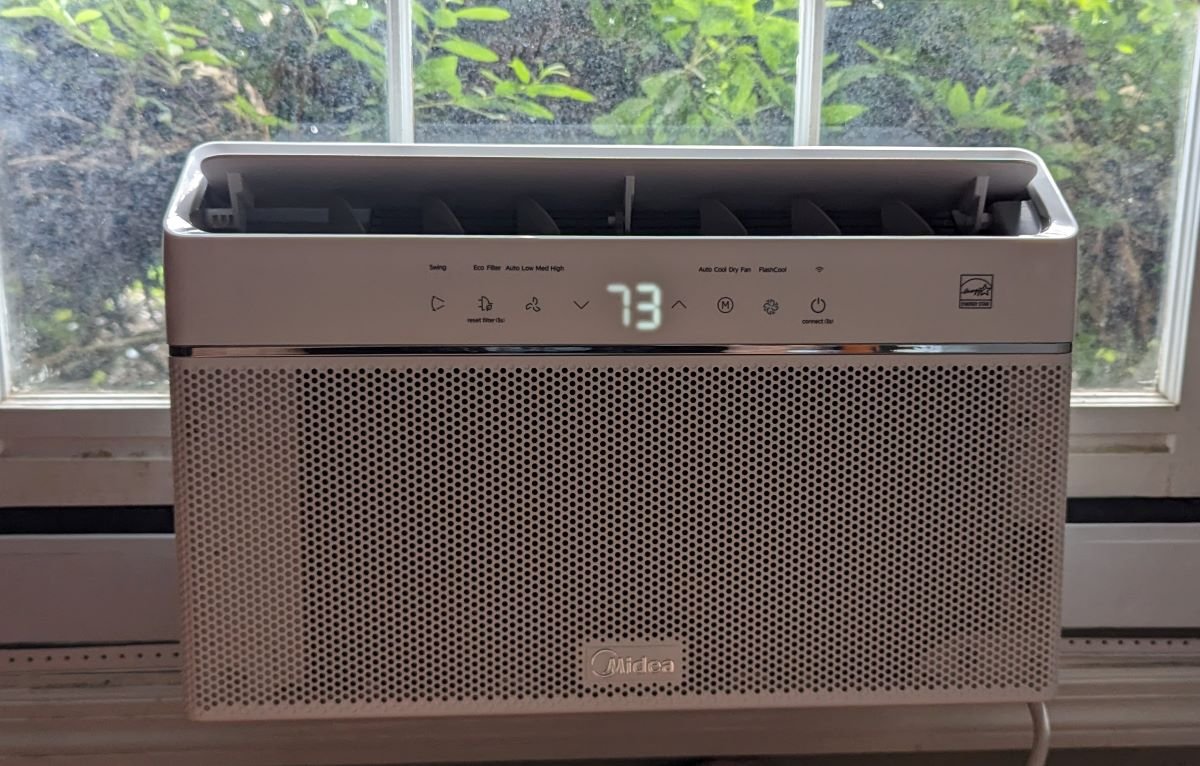
The honest answer: probably 2027, and probably from a smaller player first. The pattern from every previous Matter category — ceiling fans, bulbs, window ACs — is that the incumbent with the strongest app is also the slowest to standardize, because Matter erodes the lock-in that justifies the app. ChargePoint, Tesla, and Enphase all have a lot to lose; expect Wallbox or Emporia to ship first to claim mindshare, then drag the rest in.
For now, the Level 2 charger market is in the same place smart lighting was in 2017 — every brand has a great app, none of them talk to each other, and the standards body has the spec but not the products. Buy the charger that fits your ecosystem and your panel, and let the standards committee catch up.